In a perfect world, we’d all chase storms, book trips at the last minute and ski wherever the snow was deepest that week.
But most of us don’t live in that world.
We’ve got jobs. Families. School schedules. Vacations that have to be requested months ahead of time. Sometimes you get one big ski trip all winter, and that’s it.
Which means the question isn’t always:
Where has the best snow right now?
Sometimes it’s:
If I can travel in January, where gives me the best odds? What about March? Or May?
That’s really what this guide is about.
Because the best time to go skiing depends just as much on where you’re going as when you can travel. In October, you’re looking for elevation and snowmaking. By December, you want somewhere that tends to build a real base early. February is about deep winter conditions. March can favor places that keep stacking snow while other regions start warming up. And by May or June, the list gets VERY short.
So instead of asking for the single best ski resort in North America, we’re doing something more useful:
Where would we go if we had to plan a ski trip in each month of the season?
Consider it our attempt at building the ultimate endless winter for people who, unfortunately, still have lives outside of skiing.
October: Colorado’s High Country
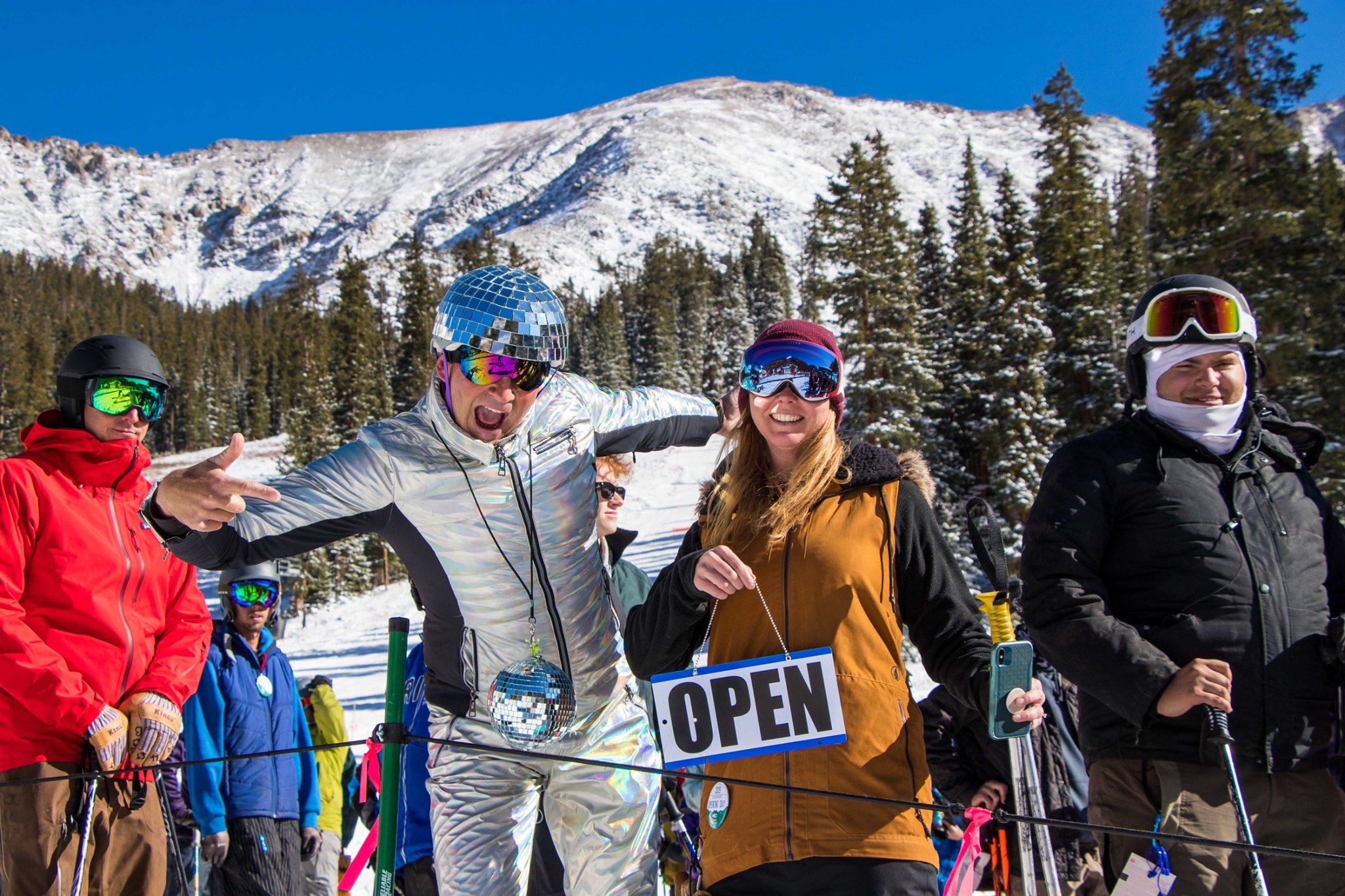
Arapahoe Basin, Keystone, Loveland and Maybe Winter Park
If October is the month life gives you, let’s be realistic about what we’re trying to accomplish. This isn’t the month we’d plan a powder vacation. We’re trying to ski.
That’s why we’d put our chips on Colorado’s high country instead of any single ski area. Arapahoe Basin, Keystone and Loveland have spent years pushing to open as early as possible, and Winter Park has increasingly joined the race. The real advantage isn’t that one of these mountains might open early. It’s that several of them are trying.
Maybe A-Basin gets the cold temperatures first. Maybe Keystone’s snowmaking comes together faster. Maybe an early storm favors Loveland. Maybe Winter Park sneaks into the conversation. We don’t really care who wins. We care that Colorado gives us multiple chances to get on snow.
Will the terrain probably be limited? Yep. Could you be skiing one or two runs surrounded by a bunch of extremely excited people who have also been staring at their skis since April? Absolutely.
But it’s October. We’re stacking the odds.
Want to know who actually wins the opening race? Every fall, we track the first ski resort openings across North America and keep updating it as winter spreads across the continent.
November: Mt. Baker, Washington and Wolf Creek, Colorado
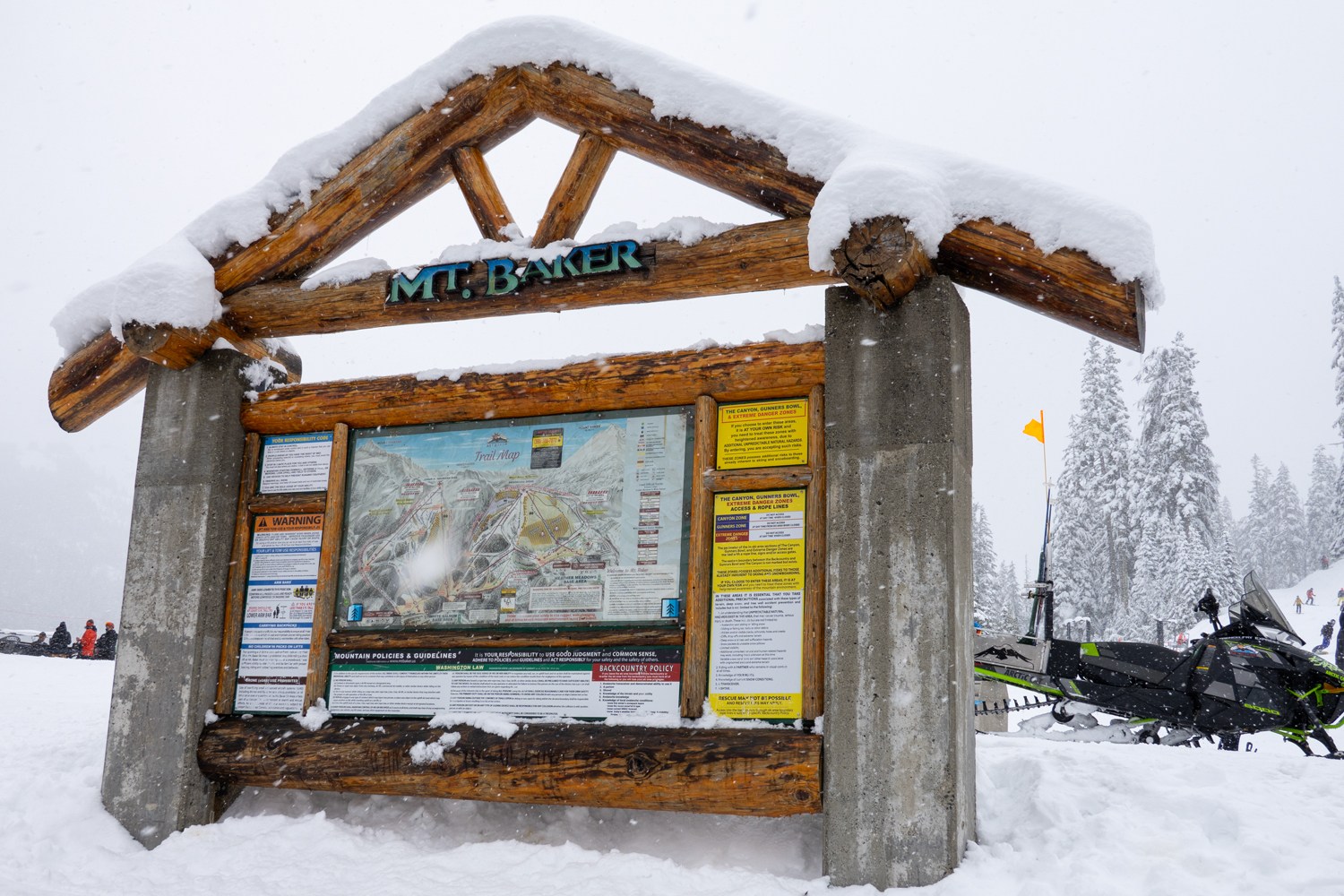
By November, we get greedier. We’re not simply looking for somewhere with a lift spinning anymore. We want somewhere capable of delivering legitimate midwinter conditions before winter is fully underway.
That’s why two VERY different mountains get our attention: Mt. Baker and Wolf Creek.
Mt. Baker
Baker relies entirely on natural snowfall, which means November can be a gamble. It’s relatively low elevation, and a warm Pacific storm can make things ugly fast or keep the mountain from opening at all. But when the temperatures cooperate, Baker can go from almost nothing to winter in a matter of days.
The ski area generally wants somewhere in the neighborhood of 20 to 40 inches of snowpack at Heather Meadows before it even considers opening. Not 40 inches of snowfall. Roughly 40 inches of settled snow actually sitting on the ground.
Think about that for a second. Plenty of ski areas don’t receive 40 inches of total snowfall in an entire season. Baker can be waiting for that much snow to be sitting on the ground before opening the lifts.
And when Baker opens early because that snowpack is actually there? It can be all time. I’ve experienced early season Baker twice, and both times it felt less like November skiing and more like a legit midwinter day at most other ski areas.
It was magical.
Wolf Creek
Wolf Creek gives us almost the opposite setup.
Instead of sitting relatively low and waiting for Pacific storms to arrive cold enough, Wolf Creek sits high in Colorado’s Southern San Juans, where the right early season storm can pile up natural snow incredibly quickly.
And when that happens, we’re not necessarily talking about a couple of groomers.
Wolf Creek has had some ridiculous Novembers. In 2022, 90% of the mountain was open by November 20. In 2024, it had 95% open by November 10 and the entire 1,600 acre mountain open by the end of the month.
That’s a LOT of real skiing for November.
Of course, this is exactly where our whole stacking the odds philosophy comes in. In 2023, Wolf Creek had only three acres open on Thanksgiving before jumping to 60% of the mountain just five days later.
November is still November.
But if we’re trying to find places capable of jumping straight from fall into REAL winter, Baker and Wolf Creek are two of the first places we’d watch.
If November is the only month you can travel, we’ve gone much deeper into the strategy in our guide to the best places to ski in November. And if one of these mountains catches your attention, our Local’s Guide to Mt. Baker and Wolf Creek Ski Area guide breaks down how we’d actually ski the mountain.
December: Grand Targhee, Wyoming

By December, our expectations change again. We’re no longer satisfied just knowing a mountain might be open. If we’re planning a ski vacation around the holidays or using precious PTO before the end of the year, we want somewhere with a better chance of having the terrain we actually traveled there to ski open.
That’s why Grand Targhee might have one of the craziest early season track records in North America.
Targhee averages more than 500 inches of snow annually, but the number that really gets our attention is its Christmas track record. Only one season in its history has failed to have the entire mountain open by Christmas.
And of course, that one exception was the abysmal 2025 / 2026 ski season. Targhee finished that winter with only 333 inches of snow, dramatically below its usual 500 plus inches, and even it struggled to get some terrain online.
Think about that for a second. Plenty of famous ski resorts can’t come close to saying they’ve essentially had the whole mountain ready by Christmas year after year.
That doesn’t mean Targhee guarantees a great Christmas trip. Weather will ALWAYS be weather. But if December is the month your family schedule gives you and you have to book months ahead, that kind of history is exactly what we mean by stacking the odds.
And when the normal Targhee snow machine is running? You’re not just hoping the lifts are open. You have a legitimate shot at skiing the mountain the way it was meant to be skied.
January: British Columbia’s Powder Highway

By January, winter should finally be doing winter things. We’re not simply asking whether enough terrain is open anymore. We’re asking:
Where gives us the most chances to find good snow without spending half the trip battling everyone else for it?
That’s why we’d head for British Columbia’s Powder Highway.
This isn’t one ski area riding one storm track. The route crosses multiple mountain ranges and connects eight alpine resorts, and conditions can vary dramatically from one end of the region to the other. One zone might miss while another gets hammered.
And here’s the important part: they’re still close enough together that you can actually do something about it.
With a car and a flexible itinerary, you can shift your plans depending on where the storms are lining up. Maybe RED Mountain and Whitewater are getting the goods. Maybe the better snow is farther north toward Revelstoke. Maybe you head east toward Kicking Horse or Fernie.
That flexibility is already a huge advantage in January, but there’s another reason we love this region at that point in the season: the crowds.
January can be prime time at some of North America’s most famous ski destinations. The skiing might be great, but so can the lift lines, parking headaches and competition for every obvious powder stash.
The Powder Highway can feel very different. These aren’t secret ski areas, and some mountains absolutely get busy, but spread yourself across the region and there are still plenty of places where skiing feels refreshingly sane. We’d rather spend our vacation figuring out which mountain got the snow than figuring out how early we need to wake up just to get a parking spot.
And if you really want to stack the odds, the Powder Highway gives you another option most ski regions can’t match: go cat skiing. Or, if the budget allows, go heli skiing.
This part of British Columbia has an incredible concentration of mechanized backcountry skiing. Instead of fighting everyone for the same powder off a chairlift, you can spend a day riding a snowcat into the backcountry or flying into terrain most skiers will never see.
It doesn’t guarantee perfect snow. Nothing does. But it can dramatically improve your chances of finding fresh turns while also checking off one of skiing’s biggest bucket list experiences.
We’ve done cat skiing ourselves, and it’s one of those experiences that completely changes what you think a ski day can be. If you’re wondering what that actually looks like, read about our experience cat skiing with White Grizzly or our trip to the absolute powder playground that is Baldface Lodge. Two very different experiences, both showing just how deep the cat skiing rabbit hole goes in this part of British Columbia.
So instead of putting every vacation day on one resort, you’re putting yourself inside a region with multiple storm tracks, multiple mountain ranges, multiple ski areas, fewer of the headaches that come with some of the biggest destination resorts and even the option to disappear into the backcountry by snowcat or helicopter.
Will every mountain be firing at once? Of course not. But if January is the month life gives us, we LOVE having the ability to look at the forecast, point the car toward wherever things look best and go.
Sometimes stacking the odds means giving yourself more than one way to win.
Our Powder Highway Guide goes WAY deeper into the resorts, towns, logistics and how to turn the region into one massive snow safari.
February: Alta and Snowbird, Utah

By February, we’re looking for something different. There are plenty of places capable of having an incredible February. Tahoe can get buried. Colorado can light up. The Pacific Northwest can go on a tear.
But that doesn’t happen everywhere every year. Little Cottonwood Canyon is Mr. Consistent.
Alta averages more than 500 inches of snow each winter, and what impresses us isn’t simply the size of that number. It’s how consistently the snow tends to arrive throughout the heart of the season.
December, January, February and March all put up remarkably strong snowfall averages. Instead of needing one miracle storm cycle to save the trip, you’re choosing a place where winter has a habit of showing up month after month. That’s why February feels like such a good time to put your chips here.
By then, the early season questions have usually faded. The steeper terrain has had time to fill in, the base has had months to build and you’re still squarely in the middle of one of North America’s most reliable snow climates.
Can February go dry? Absolutely. Even Alta suffered through the historically bad 2025 to 2026 winter. Yet by early February, it still had a 60 inch settled base and had managed to open every run on the mountain.
That’s the kind of consistency we’re talking about. You’re not choosing Little Cottonwood because February guarantees a monster storm. You’re choosing it because winter has a pretty remarkable habit of showing up there one way or another.
The Price of All That Snow
Of course, there’s a catch. All that snow has to fall somewhere, and a whole lot of it lands on the slopes surrounding the road into Little Cottonwood Canyon.
Avalanche mitigation, closures and powder day traffic can turn the short drive to Alta and Snowbird into an adventure of its own. We know that road well enough that it already earned a spot in our guide to the most dangerous roads in the US.
If this were our big February ski trip and the budget allowed it, we’d seriously consider staying in the canyon and removing the commute from the equation altogether.
Wake up. Look outside. Go ski. If the road closes below you for avalanche work, well, there are worse places to be stuck.
March: Lake Tahoe, California and Nevada
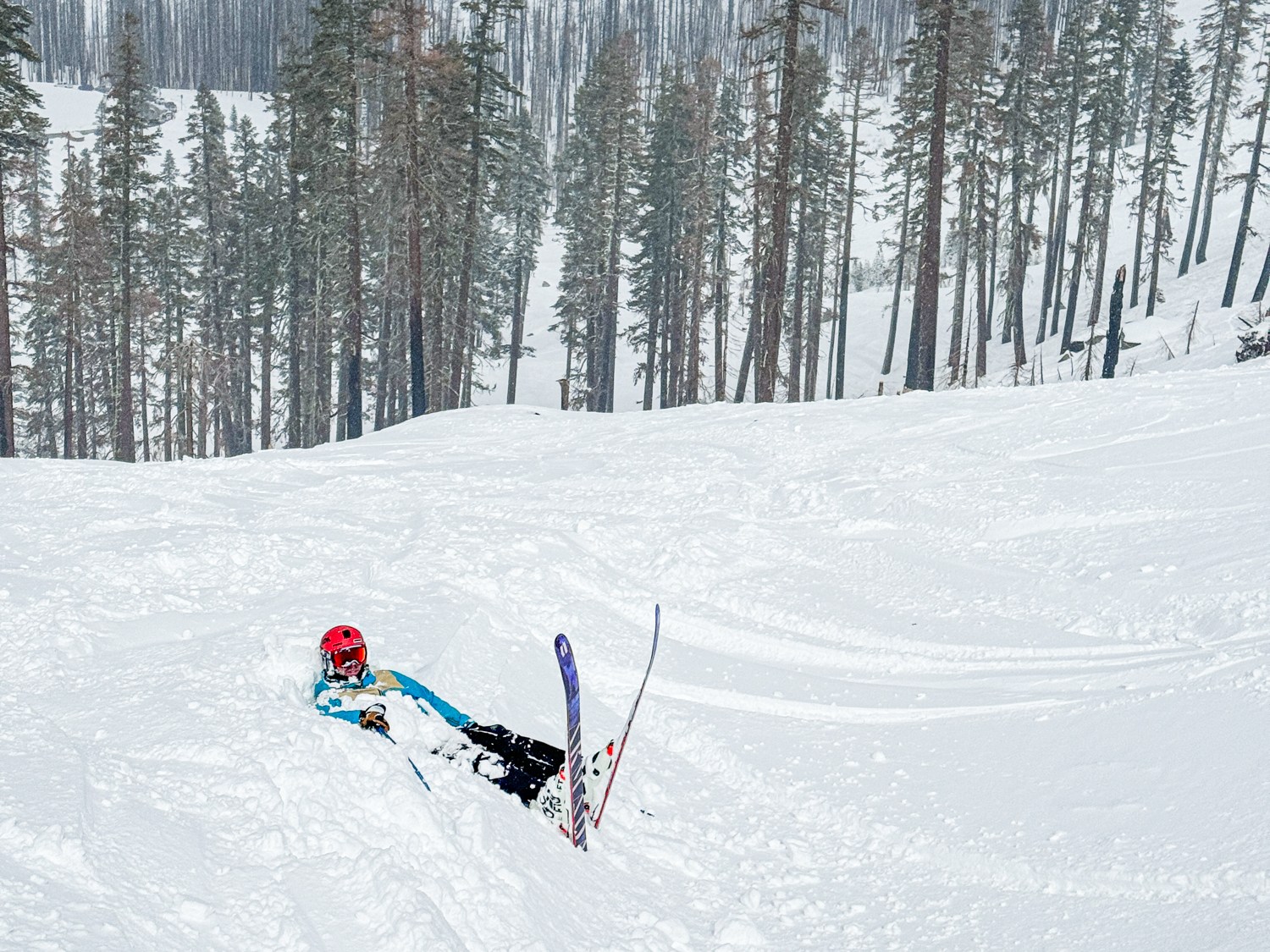
By March, we’re finally allowed to get a little greedy. The snowpack has had months to build, the steeper terrain should be filled in and Lake Tahoe still has a very real chance of getting absolutely HAMMERED.
Around here, we call it Miracle March.
Tahoe winters can be wildly inconsistent. We’ve lived through stretches where the storms seem to disappear for weeks, only for March to show up and completely change the conversation. We’ve also experienced those classic Miracle March storms firsthand, where winter comes roaring back with cold, deep snow just as everyone starts wondering whether the season is over.
That volatility is exactly why we wouldn’t put Tahoe ahead of Little Cottonwood Canyon in February.
But March? That’s when we like our odds.
The biggest reason is that Tahoe gives you two completely different ways to win.
If a storm rolls in, you’re skiing powder on one of the deepest snowpacks of the season. If the weather settles into sunny days and cold nights, the snow can transition into one of our other favorite surfaces:
Corn.
Good corn isn’t slush. Repeated warming and overnight freezing gradually transforms the snow into rounded grains. Catch it after the sun has softened the surface just enough and it’s smooth, fast and ridiculously fun. Too early and it’s firm. Too late and you’re pushing through mashed potatoes.
Hit it juuuuust right? After powder, corn might be our favorite snow on the planet.
If corn is new to you, our guide to what corn snow is and how to ski it goes WAY deeper.
March has one more advantage we’ve noticed after years of living here: people start giving up on winter.
Bikes come out. Baseball starts. People mentally move toward spring even when the mountains haven’t gotten the memo. In our experience, the later a storm arrives in March, the fewer people seem to be chasing it.
That can lead to the hilarious situation where a late March storm dumps FEET of snow and somehow fewer people are fighting you for it than during a January powder day.
If March is the month life gives us, we love the possibilities.
Powder if winter comes roaring back. Corn if spring takes over. And potentially fewer people either way.
Our Best Skiing in March guide goes much deeper into the snow, crowds, sunshine and other destinations we’d consider this time of year.
April: Arapahoe Basin, Colorado
By April, most ski areas are heading in the wrong direction. Snowfall is slowing down. The sun is getting stronger. Lower elevation terrain is disappearing. And plenty of skiers have already started thinking about bikes, golf and summer.
At Arapahoe Basin, March and April are historically its two snowiest months. April alone averages roughly 52 inches of snow.
Let that sink in for a second.
At a time when most ski destinations are increasingly relying on the snow that fell earlier in the winter, A-Basin can still be adding more than four FEET of snow in an average April.
And the mountain itself is almost perfectly designed to take advantage of it. Its base sits at roughly 10,780 feet, and nearly 55% of the terrain has a northerly exposure.
That second number becomes incredibly important in April because north facing slopes receive far less punishment from the increasingly powerful spring sun. So you’re combining high elevation, serious April snowfall and a LOT of terrain capable of holding onto that snow.
That’s a ridiculous spring skiing recipe.
We love corn snow, but April at A-Basin doesn’t necessarily mean spending the entire trip chasing the daily freeze and thaw cycle. A well timed spring storm can deliver legitimately wintry skiing while resorts elsewhere are already firmly in spring mode.
And if it doesn’t snow? You’re still at one of North America’s great spring skiing mountains, with sunshine, softening snow and The Beach waiting at the bottom.
That’s really why A-Basin gets our vote. Most ski areas survive April because of the winter they already had. A-Basin has the unusual ability to keep adding to it.
Even with all of that, April can still go dry. But if April is the month life gives us, we want to stack the odds somewhere that’s high, heavily north facing and historically still receiving serious snowfall.
A-Basin checks all three boxes.
Our guide to the best April skiing goes much deeper into why A-Basin works so well and the other mountains we’d consider once spring takes over.
May: Mt. Bachelor, Oregon
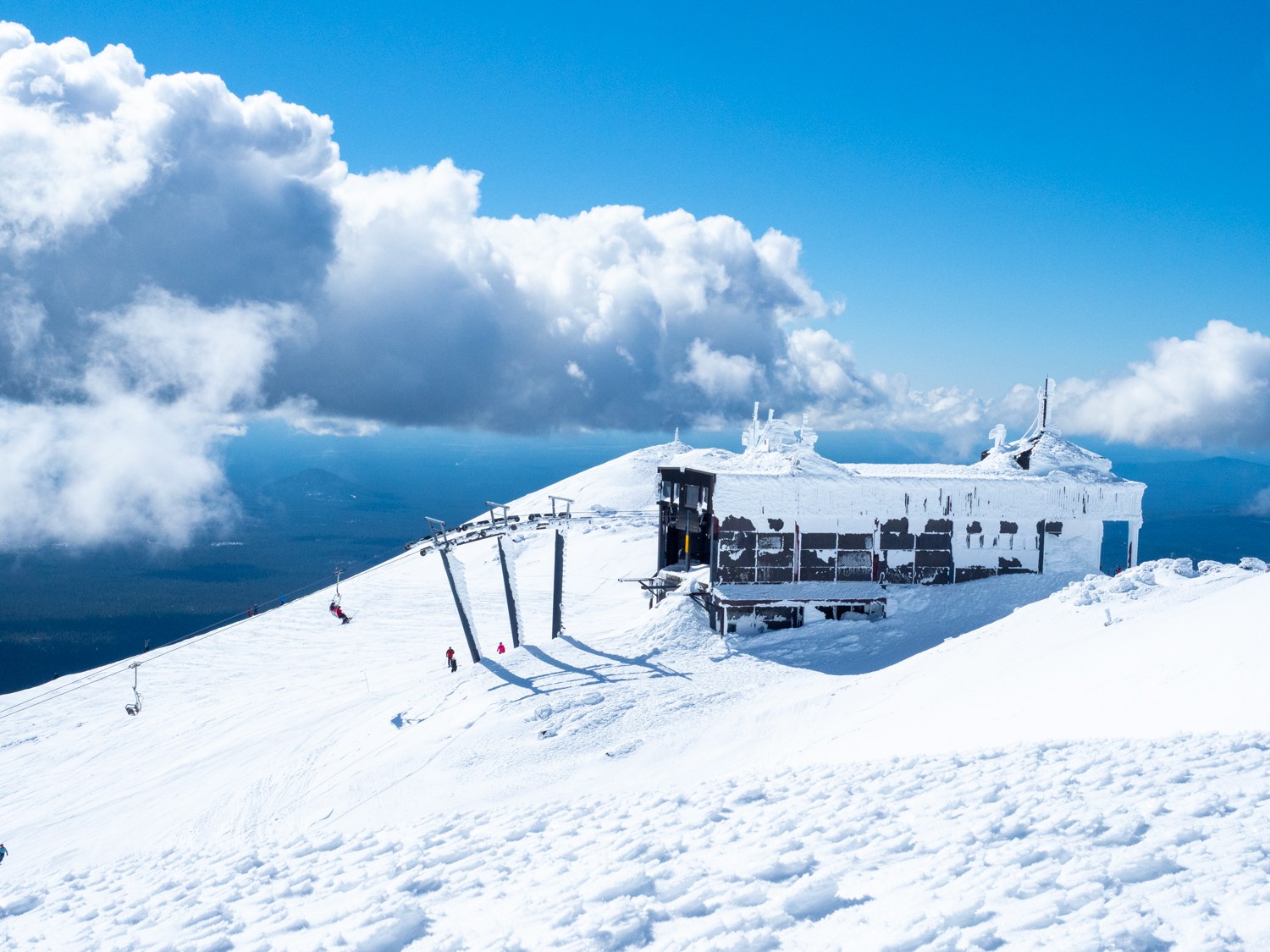
By May, most ski resorts have either closed for the season or shrunk to a fraction of their winter footprint. Mt. Bachelor can still have 2,000 plus acres of terrain and more than 3,100 vertical feet available.
That’s INSANE for May, and it’s why we could even argue that Bachelor is better to visit in spring than in winter.
A big reason is the Summit chairlift. It accesses roughly 1,700 vertical feet of completely above tree line terrain, but winter storms hammer Bachelor so hard that Summit is closed at least 30% of the time during winter because of storms and wind.
Come spring, those stormy days become less frequent and suddenly some of Bachelor’s most elusive terrain can be wide open and ready for shredding. You’re skiing off the top of a 9,000 foot volcano in May while a huge chunk of the ski world has already put its gear away.
That alone should put Bachelor on a spring skier’s bucket list.
But then there’s the snow itself.
Bachelor spends the winter building a massive snowpack, and between spring storms the mountain turns into one giant corn harvesting machine. Because Bachelor is a dormant volcano, you can almost use the mountain like a giant sundial.
Different aspects soften at different times, which means instead of waiting around for the corn to come to you, you can follow it around the mountain.
We’ve spent enough spring days here that we’ve actually put together a guide to skiing Mt. Bachelor in spring that teaches you how to do exactly that, including where to start in the morning, when to move toward Summit and how to keep chasing the good snow as the sun works its way around the volcano.
Hit the timing right and you get that beautiful window when frozen spring snow softens into smooth, fast corn.
And once the snow gets too soft in the afternoon? Go ride your bike.
That’s another reason we love Bachelor in May. Bend is right down the road, so you can ski corn all morning, then spend the afternoon mountain biking, hiking, paddling, golfing or sitting at a brewery wondering why everyone thinks ski season ends in March.
Few ski trips let you pack this much into one day.
Could a late season storm show up and give you powder instead? Absolutely. But we’re not choosing Bachelor in May because we’re desperately hanging onto winter.
We’re choosing it because few places in North America let you ski THIS much mountain THIS late in the season.
And spring might actually give you better access to the very terrain that makes Bachelor special in the first place.
If you’re new to this time of year, our spring skiing and snowboarding tips can help you get more out of those freeze and thaw cycles, changing conditions and long sunny days.
June: Mammoth Mountain, California
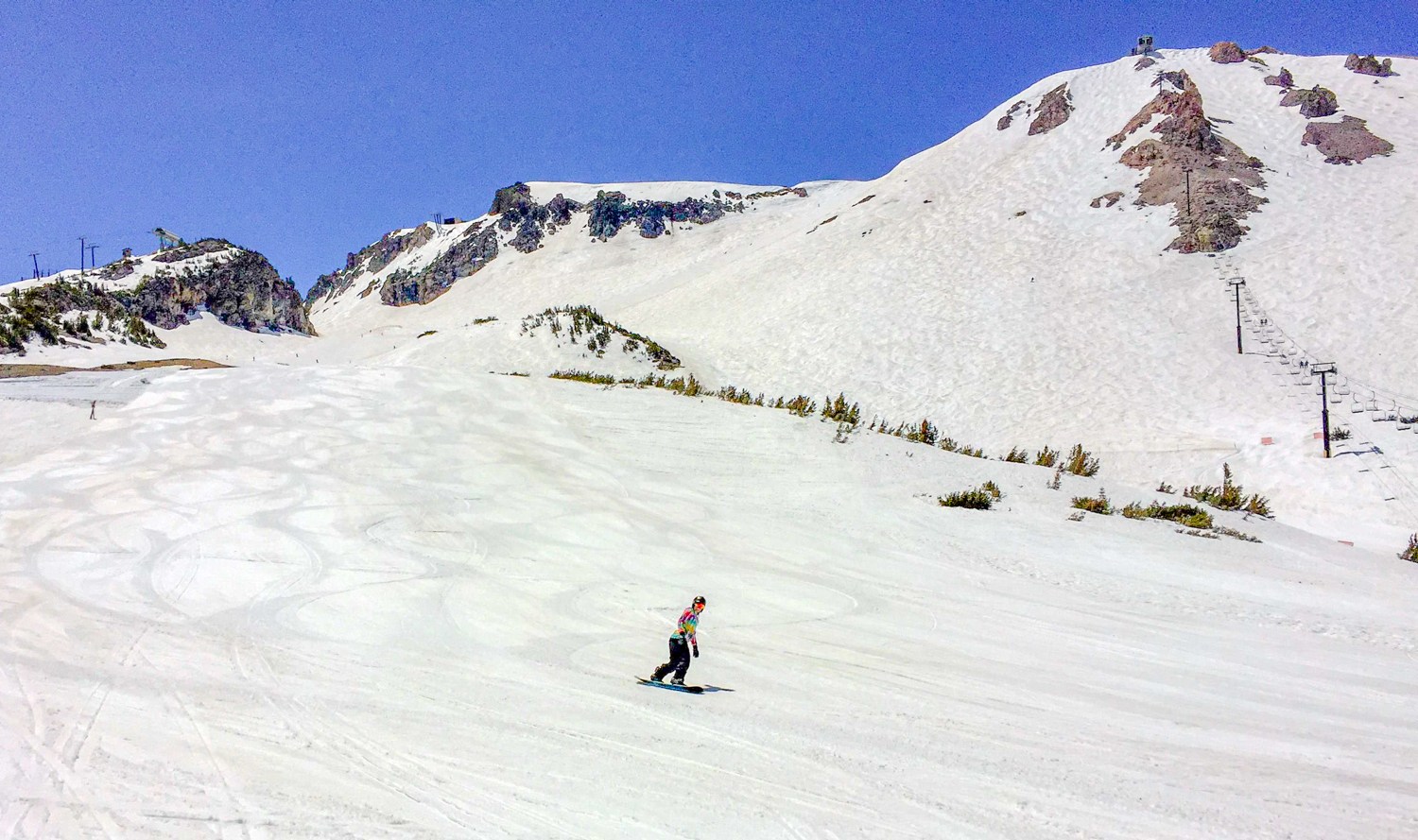
By June, simply finding a ski resort that’s still open becomes part of the challenge. But if we’re going to keep chasing winter, we don’t want to ski one sad strip of snow just so we can say we did it.
We still want a real ski day.
That’s why Mammoth Mountain gets our vote.
Thanks to its massive Sierra snowpack and high elevation, Mammoth has built a reputation as the king of late season skiing. In the right snow year, you can still be skiing legitimate terrain in June while most western resorts have been closed for weeks.
But what really separates Mammoth this late in the season is how seriously they take the snow itself. Cold nights and clear skies help set up the classic spring freeze and thaw cycle. Mammoth adjusts operations around that window, puts a ton of effort into grooming and even does something that sounds completely backwards:
They salt the runs.
Yep. Salt.
Certain runs are treated with salt to help firm the surface and combat that sticky spring snow as temperatures climb. We’ve ridden those salted runs ourselves in late June, and when everything lines up, the skiing can be ridiculously good.
Our guide to whether the snow is actually still good in June goes WAY deeper into the tricks resorts use to manage late season snow, including early operating hours, closing before the snow gets too soft and, yes, salting the runs.
And then there’s everything else we love about Mammoth this time of year: no crowds, barley pops, soft creamy snow and a sick goggle tan.
Midwinter might give you powder. But if June is the month life gives us, Mammoth gives us something almost as rare:
A legitimate western ski trip when most people have already moved on to summer.
July and August: Timberline, Oregon
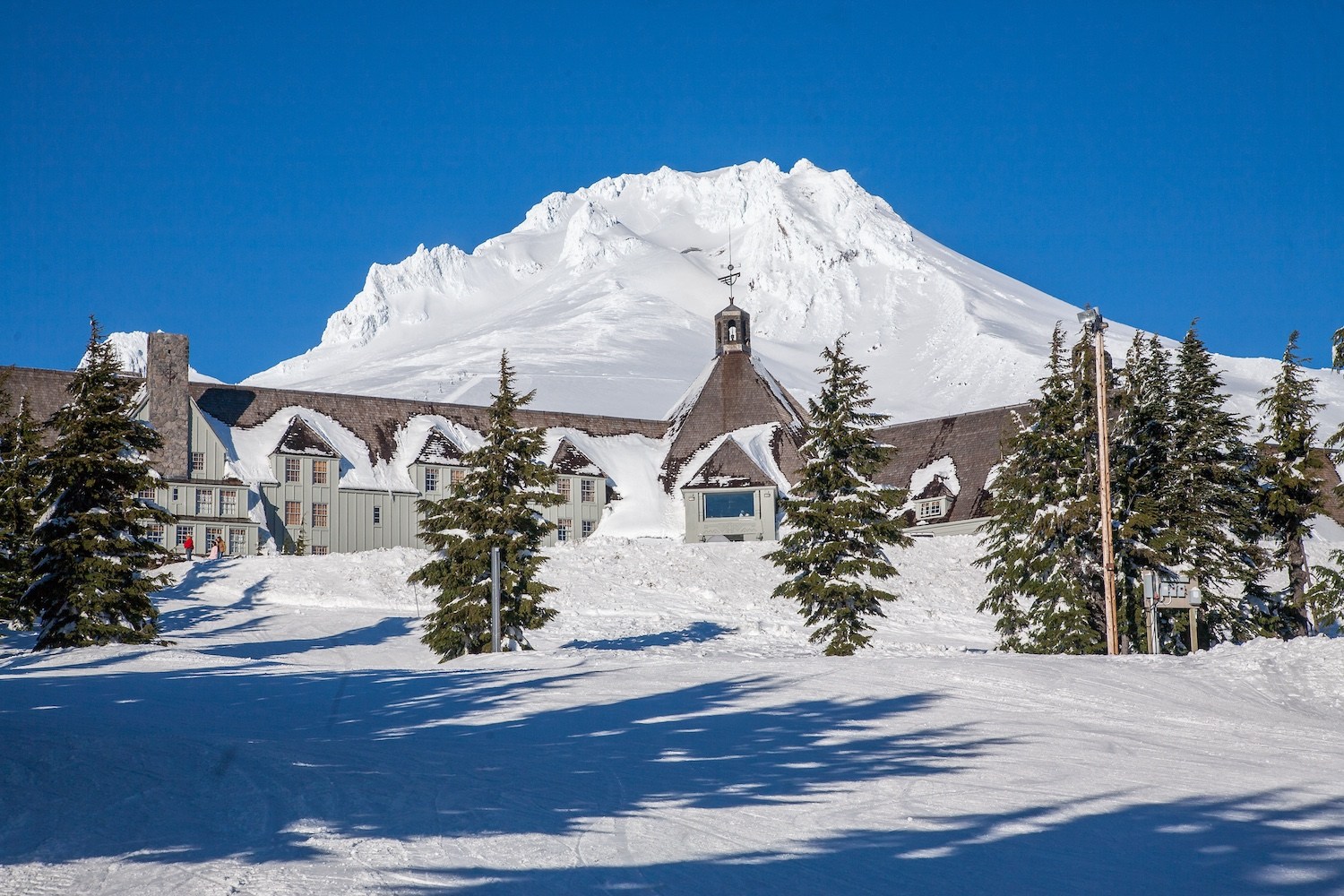
By July, the list of places where you can still ski in North America gets REALLY short. By August, if we’re talking public, lift served skiing on actual snow in the United States, it basically becomes a Timberline conversation.
High on the slopes of Mt. Hood, the Palmer Snowfield is built for summer skiing. While most of North America has moved completely into bikes, beaches and backyard barbecues, you can still click into your skis, ride a chairlift and make actual turns.
At this point, we’re not pretending this is a normal ski vacation. This is summer skiing.
The terrain is more limited. The snow depends on what winter left behind. And the deeper you get into summer, the more Mother Nature gets the final say.
But that’s exactly why Timberline gets July and August. Its summer snow program is built around the Palmer Snowfield, with skiing running from June through August when conditions cooperate.
And don’t assume Palmer is only for racers and kids at summer camp. Timberline attracts everyone from Olympic athletes and race teams to freestyle camps, but they also keep terrain available to the public, giving intermediate and advanced skiers and snowboarders the chance to make summer turns without signing up for a camp.
That’s a pretty wild experience when you think about it. You could be skiing alongside athletes training for next winter while most of your friends are wondering whether it’s too hot to mow the lawn.
Will Timberline always make it deep into August? Nope. By this point in our endless winter, we’re living almost entirely off the snowpack winter left behind.
But if July or August is the month life gives us and we want to keep this ridiculous ski season going without flying to the Southern Hemisphere, we’re pointing the car toward Mt. Hood.
Sometimes stacking the odds means having eight resorts to choose from. By August, it means knowing the one place that’s still willing to try.
And if this has you wondering just how many ways there are to keep skiing after the summer solstice, our guide to summer skiing in North America covers everything from Timberline and Beartooth Basin to race camps and some VERY unconventional ways to keep making turns.
So Where Would You Go?
Could Mother Nature make this entire list look stupid in any given year? Absolutely. That’s skiing.
The point isn’t to predict perfect conditions months in advance. None of us can do that. It’s to look at the month life gives you and put yourself somewhere with a better chance of making the most of it.
Sometimes that means chasing multiple storm tracks across British Columbia. Sometimes it means betting on high elevation and north facing terrain. Sometimes it means following the corn around a volcano. And by August, it means finding the last chairlift still spinning over snow.
October or August. Powder or corn.
If there’s snow somewhere, we’re not ready to call the season over.