Let’s be honest. Mountain biking can be a serious pain in the you know what. Your first few rides are all smiles, dirt, and high fives. Then the soreness kicks in. Maybe your sit bones ache, chafing makes every pedal stroke miserable, or your lower back feels wrecked after a ride. The good news? Most bike seat pain can be fixed. After talking with our local bike shop owner, we learned that not all saddle pain is the same. Just like any other injury, identifying the type of discomfort you’re experiencing is the first step toward finding the right solution. Below, we’ll break down the most common causes of bike seat pain and how to get back to enjoying the ride.
Fixing Sit Bone Soreness
Since Jaime first started mountain biking, sit bone pain was the number one reason she cut rides short. She used to joke that she suffered from “Cheek Screaming Syndrome.” The pain felt deep under her cheeks, almost like a bruise, and would linger long after the ride was over. This type of discomfort comes from pressure on your sit bones, the bony parts of your pelvis that are designed to support your weight on the saddle. If it feels like you’ve been sitting on a rock all day, chances are this is what you’re dealing with.

Measure Your Sit Bones
Like many riders, Jaime refused to swap saddles because she didn’t want to ride around on what she called a granny seat. Ironically, sit bone pain is often a sign that your saddle is too narrow, not that it needs more padding. Before buying a replacement, it’s worth checking out our guide to the best MTB saddles, which breaks down the top options for different riding styles, anatomies, and comfort preferences. Even within the world of specific saddles, there is a huge difference in fit. For example, Jaime started with a WTB Deva. It was a massive improvement over the stock saddle that came on her bike, but it still caused pain. On longer rides she would experience severe discomfort and numbness in both her sit bones and genital area. After measuring her sit bones, she discovered they were 148 mm apart while the WTB Deva was only 145 mm wide.
That was the problem.
She needed a saddle that was roughly 20 mm wider than her sit bone measurement so her weight could be properly supported.
How to Measure Your Sit Bone Width
Many bike shops have specialized tools that can quickly measure your sit bone width and recommend saddles that fit your anatomy. If you’d rather skip the bike shop or simply want to check at home first, there’s a surprisingly effective DIY method. It’s exactly how Jaime figured out why every saddle she tried felt wrong.
DIY Test – The Cardboard Test
Place a piece of corrugated cardboard on a hard chair and take a seat. Really press down into the cardboard by putting your weight on your sit bones. One trick is to lift your toes slightly off the ground so more pressure goes through your pelvis. After a few seconds, stand up and look for the two deepest impressions left behind. Mark the center of each indentation and measure the distance between them in millimeters using a tape measure or calipers. That’s your sit bone width and one of the most important numbers for finding a saddle that actually fits.
It may not be the most scientific bike fitting process in the world, but a piece of cardboard can tell you a lot. In Jaime’s case, once she switched to the Specialized Power COMP with MIMIC, it was game on. The pain disappeared, her rides got longer, and the saddle never felt oversized or awkward. To this day, she refuses to ride anything else.
Chafing, Skin Irritation and Saddle Sores
Not all bike seat pain is created equal. If the discomfort feels more like rubbing, burning, raw skin, or the beginning of a saddle sore rather than a deep ache in your sit bones, you’re probably dealing with friction. Chafing, inner thigh rubbing, and saddle sores are incredibly common among mountain bikers, especially on longer rides or in hot weather. The good news? They’re usually much easier to fix.
Chamois: Cycling’s Dirty Little Secret

For me, the idea of riding without a chamois now sounds absolutely crazy.
If you’re new to cycling, a chamois is the padded liner found in cycling shorts. No, we’re not talking about the soft leather cloth used to dry cars. We’re talking about one of the biggest comfort upgrades you can make on a bike. It’s also cycling’s dirty little secret. Most experienced riders swear by them, but nobody seems to tell beginners just how much of a difference they make.
Sure, the first time you put one on, it might feel a little like you’re wearing a diaper. But once you’re a few miles into a ride, you’ll understand why so many riders won’t leave home without one. The padding helps reduce friction, cushions pressure points, and can dramatically extend how long you’re able to ride comfortably.
Just like saddles, don’t assume the first pair you try will be the right one. Chamois fit, padding, and materials vary wildly between brands. Finding your favorite often takes a little trial and error.
Shredly is the Queen of Cycling
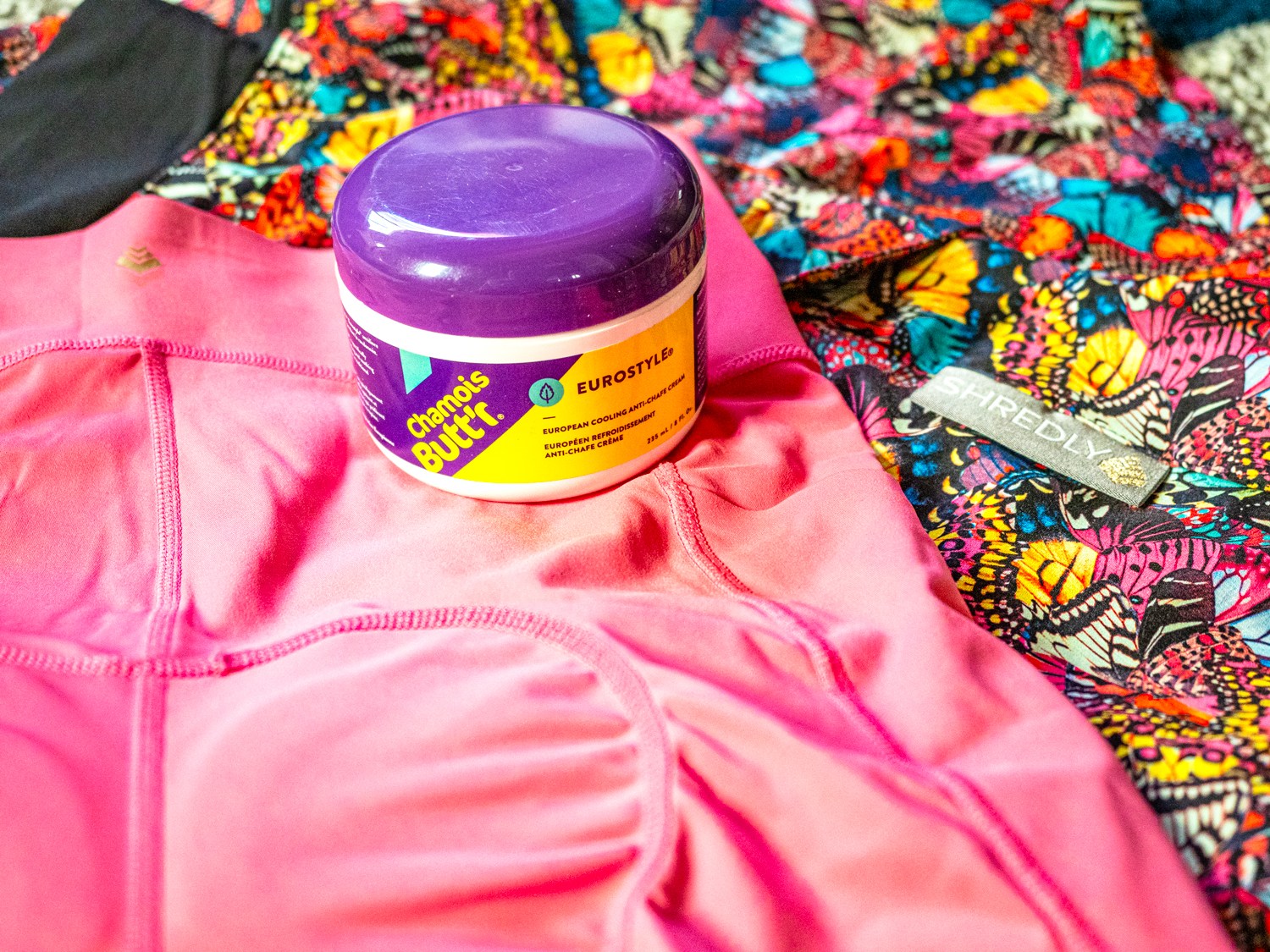
Over the years, Jaime has tried several different chamois liners, but the clear winner has been Shredly. Designed by women for women, they fit better, feel better, and have held up better than anything else she’s worn. In fact, once she found Shredly, she ended up getting rid of her old liners because there was simply no comparison.
For the guys, I’ve had great luck with Pearl iZumi. They’re comfortable, durable, and disappear beneath you, which is exactly what you want from a good chamois.
Sometimes the solution to saddle pain isn’t a new saddle at all. It’s what’s between you and the saddle.
Chamois Cream
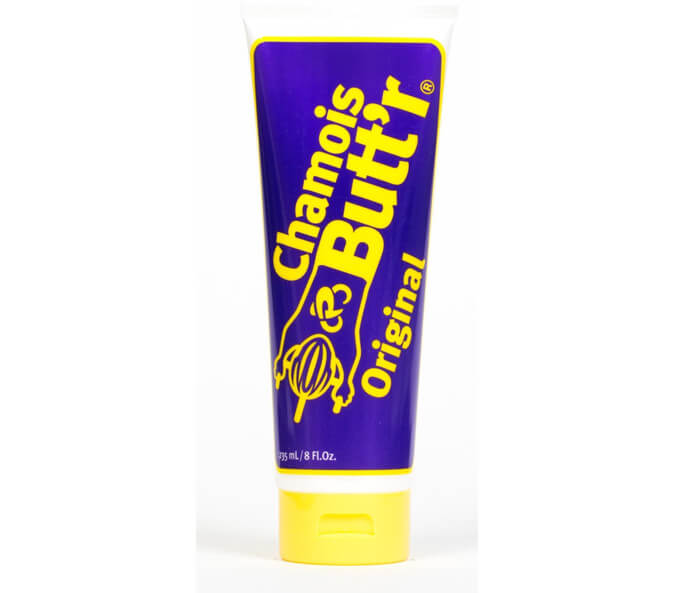
Another taboo subject cyclists don’t really talk about is chamois cream. Just like running, as your adventures get longer, chafing becomes a bigger and bigger issue that can even become a medical problem. This cream is used to help reduce friction and keep bacterial build-up at bay. Do you need to use it? If you only ride every once in awhile for a few miles, most likely No. It’s when you start riding more and your journeys get longer that suddenly preventative products like this are important. Jaime swears by it and uses it not just for mountain biking but hiking and trail running as well.
Soft Tissue Pain: Important Bits Start Filing Complaints
Soft tissue pain is different from sit bone soreness. Instead of a deep ache in your pelvis, it usually shows up as pressure, numbness, chafing, or discomfort in sensitive areas that get compressed against the saddle.
For many riders, especially women, this type of pain often takes a bit more trial and error to solve. The fix might be finding a saddle shape that better matches your anatomy. Saddles like the Specialized Power with MIMIC or the WTB Koda use shorter noses and pressure-relieving designs to reduce discomfort in sensitive areas. Other times, the answer is surprisingly simple: a better chamois, less padding, or a bike fit adjustment such as slightly tilting the saddle nose downward.
The good news is that once you identify what’s causing the pressure, a few small tweaks can make a huge difference in comfort and help you focus on the trail instead of what’s happening underneath you.
Lower Back or Tailbone Discomfort
This one hits close to home for me. I have Ankylosing Spondylitis, an autoimmune disease that is slowly trying to fuse sections of my spine together. On rough, rocky trails, every unexpected hit can feel like a bolt of lightning shooting through my lower back. What helped me most was switching to a full suspension bike and running my suspension a little softer. Sure, it might take a bit more effort on the climbs, but my back is far happier when the bike absorbs the punishment instead of my spine.
Don’t Have to Sacrifice Performance
We can agree that performance is key when riding on technical terrain. You don’t want to have a huge granny seat that’s in the way as you try to navigate a sandy patch or boulder field. Fortunately, you don’t have to spend a ton of money or sacrifice performance to make mountain biking more comfortable. These simple tricks may help take you to the “ultimate fun” zone that mountain biking can be!