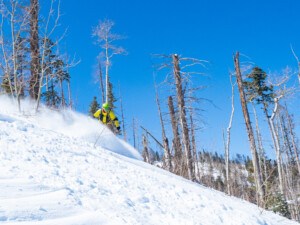
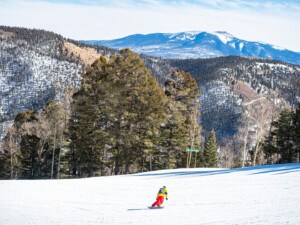
We get it. For most skiers and snowboarders, soul doesn’t matter. It’s about who’s the biggest. Which resort gets the most powder. Or even which one has the fastest lifts. Maybe it’s because we’re getting older, but that’s not what we care about anymore. We search for experiences that are different and more soulful. We’d rather savor a sick line that we had to hike to instead of lift bonging a high speed chair just to rack up vertical. And if you’re thinking about skiing in Taos, New Mexico, that’s exactly why this mountain deserves your attention. While many things have changed over the years, the soul of skiing is still alive and well at Taos Ski Valley.
Taos Ski Valley At A Glance
Skiable Terrain: 1,294 acres
Vertical: 3,131 feet
Summit: 12,481 feet
Base: 9,350 feet
Trails: 110
Lifts: 13
Terrain: 24% beginner, 25% intermediate, 51% expert
Best For: Strong intermediates through experts, especially skiers and riders who love natural terrain
The Iconic Sign
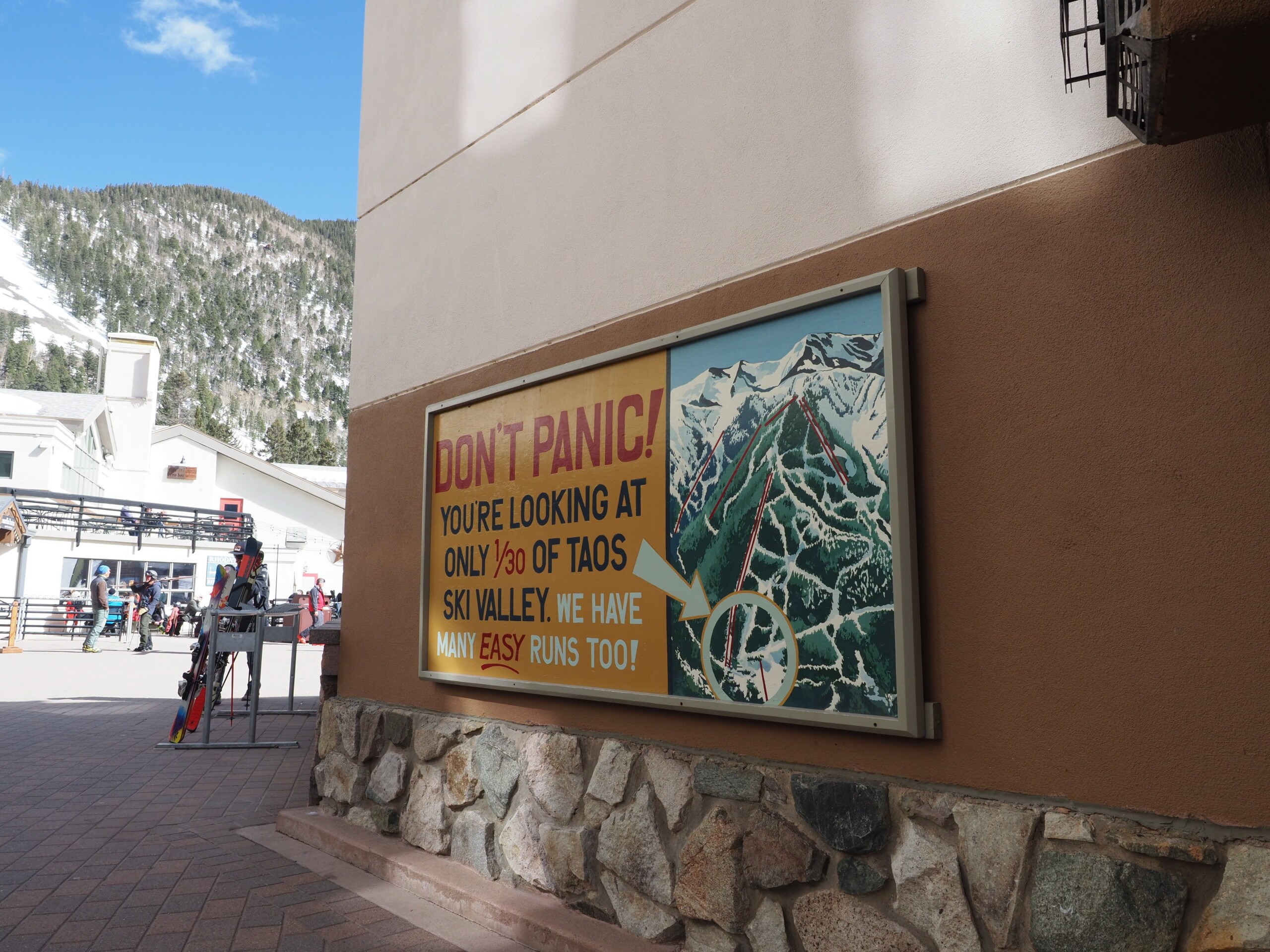
If there’s one thing that’s burned into our memory after visiting Taos, it’s the sign placed at the entrance of the village. It reads:
“DON’T PANIC! YOU’RE LOOKING AT ONLY 1/30 OF TAOS SKI VALLEY.”
The original goal back in the 1960s was to reduce the anxiety for beginners and intermediates staring up at the daunting Al’s Run and Mineshaft. Instead, it got me excited about the prospect of what was to come. Only 1/30th?!? Jeez… that’s a lot of terrain. I couldn’t wait to get on the slopes.
A Playground for Every Skier’s Dream

Riding the high speed Lift #1 up the mountain, our jaws drop at the first glimpse of the upper mountain. It’s a giant playground. Everywhere you look, the terrain is begging to be ridden. To the right, steep chutes bring back memories of classic ski films from childhood. Below, mellow groomers curve with the mountain’s natural shape, begging you to carve massive turns down them.
More Than Numbers: The True Magic of Taos
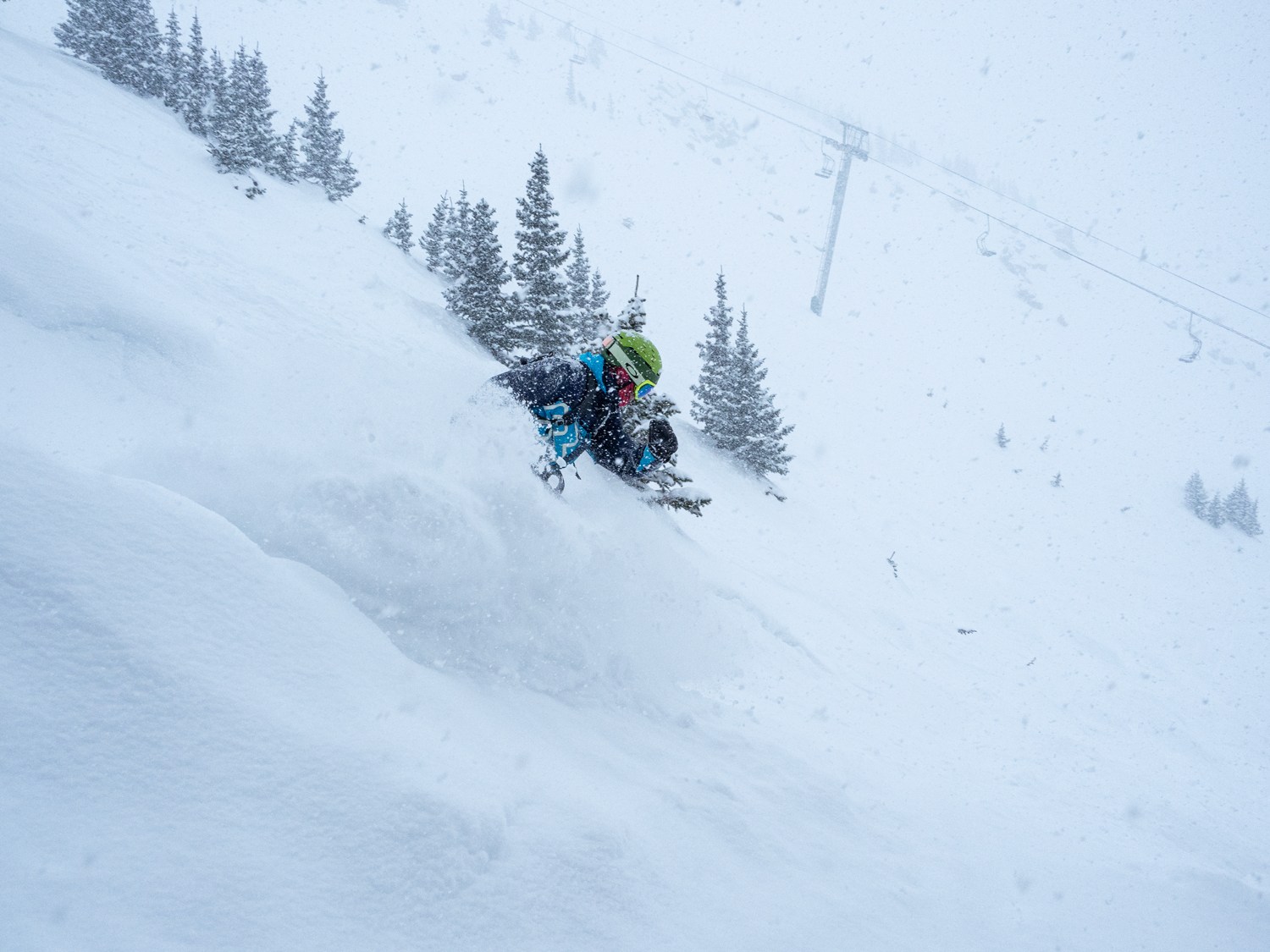
For the engineering minded out there, don’t get hung up on acreage or snowfall stats. On paper, Taos clocks in at 1,294 acres and averages around 300 inches of snow a year, but it’s how the mountain skis that really matters. The terrain naturally flows, dividing each trail so that once you drop in, you’re committed all the way to the bottom.
And then there’s the snow. Taos gets some of the lightest, fluffiest powder we’ve ever ridden. With mostly north and northeast facing slopes and a base elevation above 9,300 feet, the mountain does an incredible job of preserving the snow that falls. Somehow, Taos packs more variety and vertical into its 1,294 acres than some 4,000 acre resorts we’ve visited. We’ve even heard longtime skiers here say that after a lifetime on these slopes, they’re still finding lines they’ve never skied.
Why Taos Terrain Stands Apart
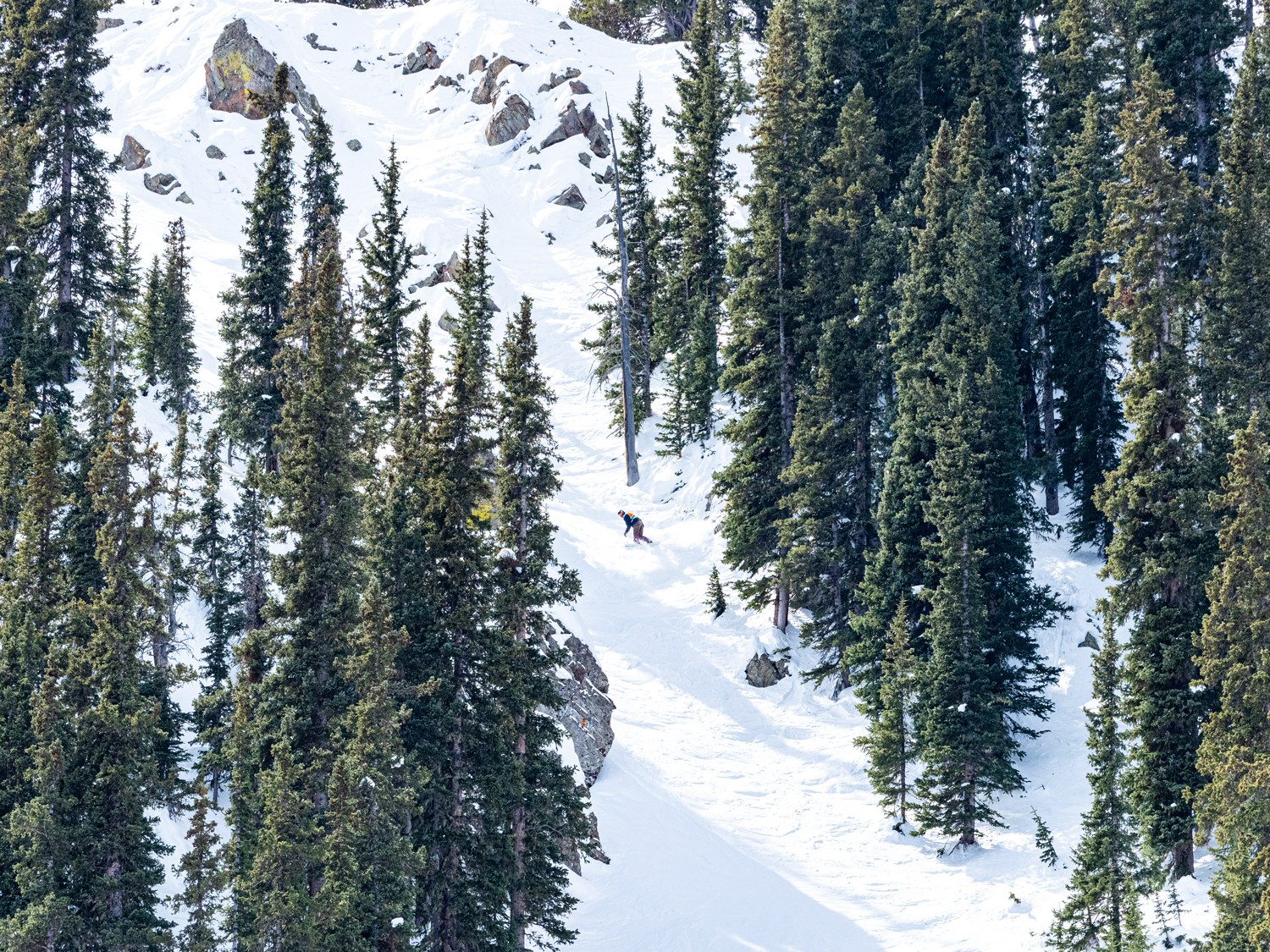
We’ve skied and snowboarded all over North America and even Japan, but Taos is hands down Jaime’s favorite. Nothing else comes close. Everything is an adventure. Each run has its own feel and character. Unlike other resorts full of long traverses and cat tracks (you know who you are), Taos just moves. Once you drop in, the mountain’s natural topography carries you from one zone to the next in a way that feels effortless.
The layout also naturally separates terrain by ability. The most challenging lines sit up top, and many come with a price of admission: a 15 to 20 minute hike along the ridgeline to reach some of the steepest shots, with Kachina Peak being the big exception thanks to the lift. That extra effort keeps a lot of skiers and riders from making the trek, which can help preserve soft snow and hidden pockets long after the obvious lines have been tracked out.
For Experts Who Crave Bold Lines: Taos Delivers
Taos lives up to its reputation as an expert’s mountain. A whopping 51 percent of the terrain is rated expert, and on average, it’s as steep or steeper than just about anywhere we’ve skied in North America. If you’re into perfectly spaced glades, head for Wild West Glades because they never disappoint. Craving steep, narrow chutes that will have you straight lining a thousand vertical feet down a sustained 30 plus degree pitch? Anything off West Basin Ridge will crank the puck factor up to eleven.
We could go on and on about all the tasty lines Taos serves up. Just know this: you won’t be disappointed.
Blue Runs, Glades & Groomers for Intermediate Riders
Skiers and riders at this level will be in heaven at Taos. Lift 8 offers smooth, banked groomers perfect for ripping turns, like Lower Stauffenberg. If you’re after well spaced glades, head to Walkyrie’s Glade off Lift 7, along with plenty of other fun trails to explore. Honestly, anything marked blue is guaranteed to be a good time.
Where to Find Beginner-Friendly Runs and Chill Spots
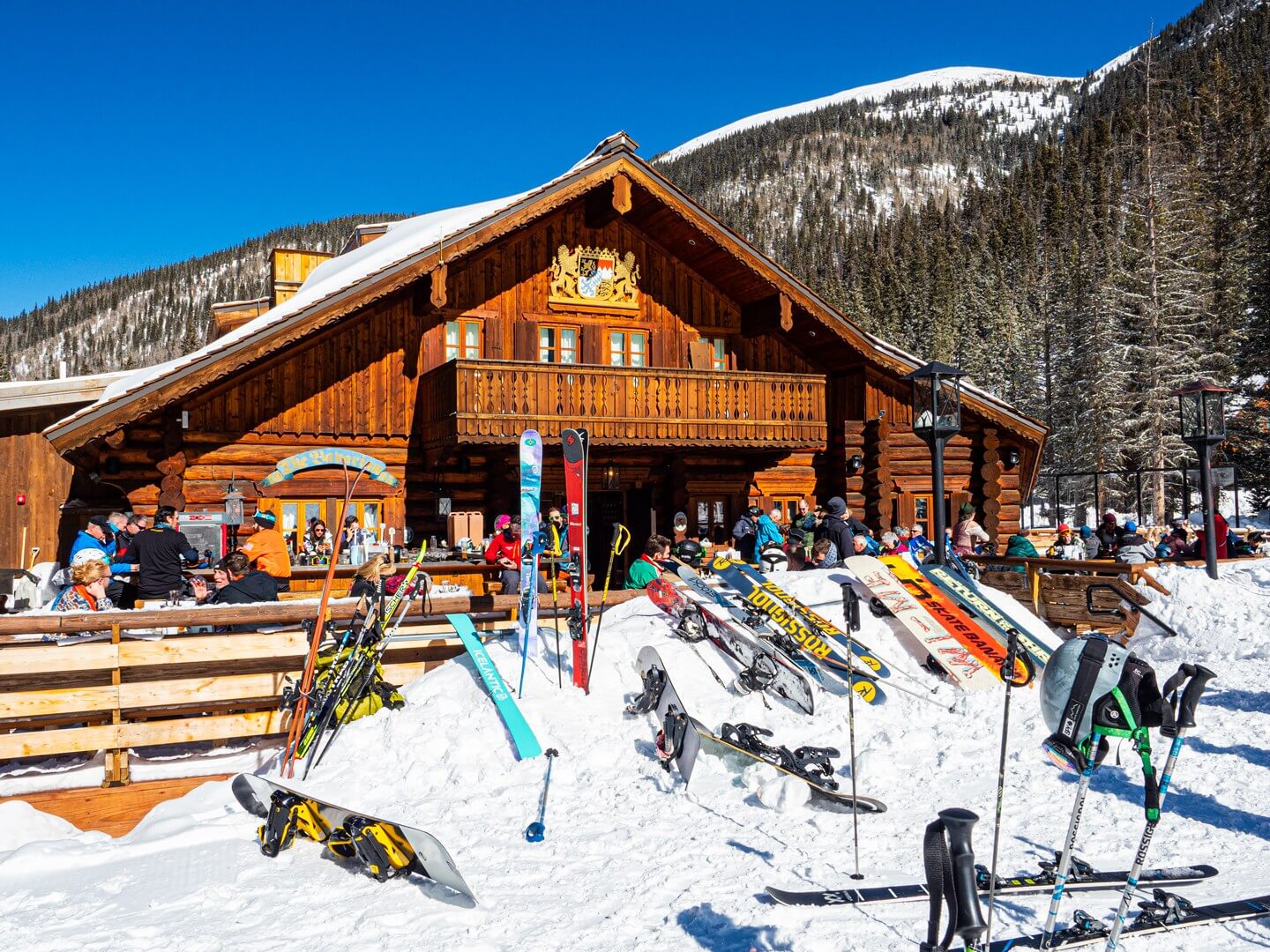
Skiing Taos is an experience earned, and beginners should be prepared for a challenge. That said, there are still areas where newer skiers and riders can have a great day. Honeysuckle winds its way down toward the backside, where you can grab a refreshment at the Bavarian. Off Lift 1, White Feather is one of the mountain’s main beginner routes, roaming its way back toward the front side and giving newer skiers a taste of the bigger mountain.
While Taos does have beginner terrain, if it’s your very first time skiing or snowboarding, we’d still consider starting at Red River or Angel Fire. You’ll find more space, a more relaxed atmosphere and plenty of room to hone your skills before graduating to Taos.
Better Not Bigger
Taos Ski Valley sits at the headwaters of the Hondo River, so its future has never been about endlessly pushing farther into the mountains. Instead, the philosophy is simple: better, not bigger. Improve what’s already here while protecting the land, supporting the surrounding community and keeping the character that makes Taos feel like Taos.
You can see that philosophy all over the mountain. Strategic lift upgrades have made it easier to move around without trying to turn Taos into a mega resort. Forest thinning and mitigation have opened up more skiable terrain within the existing footprint, including zones like Wild West Glades and Dadou’s. Snowmaking improvements help get terrain open earlier, while projects such as The Blake and the updated Lift 7 improve the experience without changing what the mountain fundamentally is. Taos also became the first ski resort in the world to earn B Corp certification, giving that philosophy some real accountability beyond marketing.
For a deeper look at what “better, not bigger” actually means, check out our story on Taos Ski Valley’s B Corp philosophy, along with the 70th anniversary upgrades that show how that vision continues to evolve.
The Kachina Lift
The installation of the Kachina Lift stirred plenty of debate among longtime Taos skiers who loved that reaching the summit once required real effort. But we get it. Most visitors don’t want to hike 30 to 45 minutes every time they want to ski terrain this good. Stand on Kachina after a fresh storm and the steep, complex lines can feel impossibly deep. Wait a few weeks without snow and the moguls can grow into VW Bug sized monsters that turn the same terrain into an entirely different challenge.
True to form, Taos walks the fine line between keeping longtime purists and visitors happy. After storms, ski patrol will often let the lift stand still for a while and open Kachina to hike access first, giving those who want to earn it the old fashioned way a chance before the chair starts spinning. It’s Taos pushing the experience forward while still protecting the soul of the mountain.
Best Time to Ski Taos
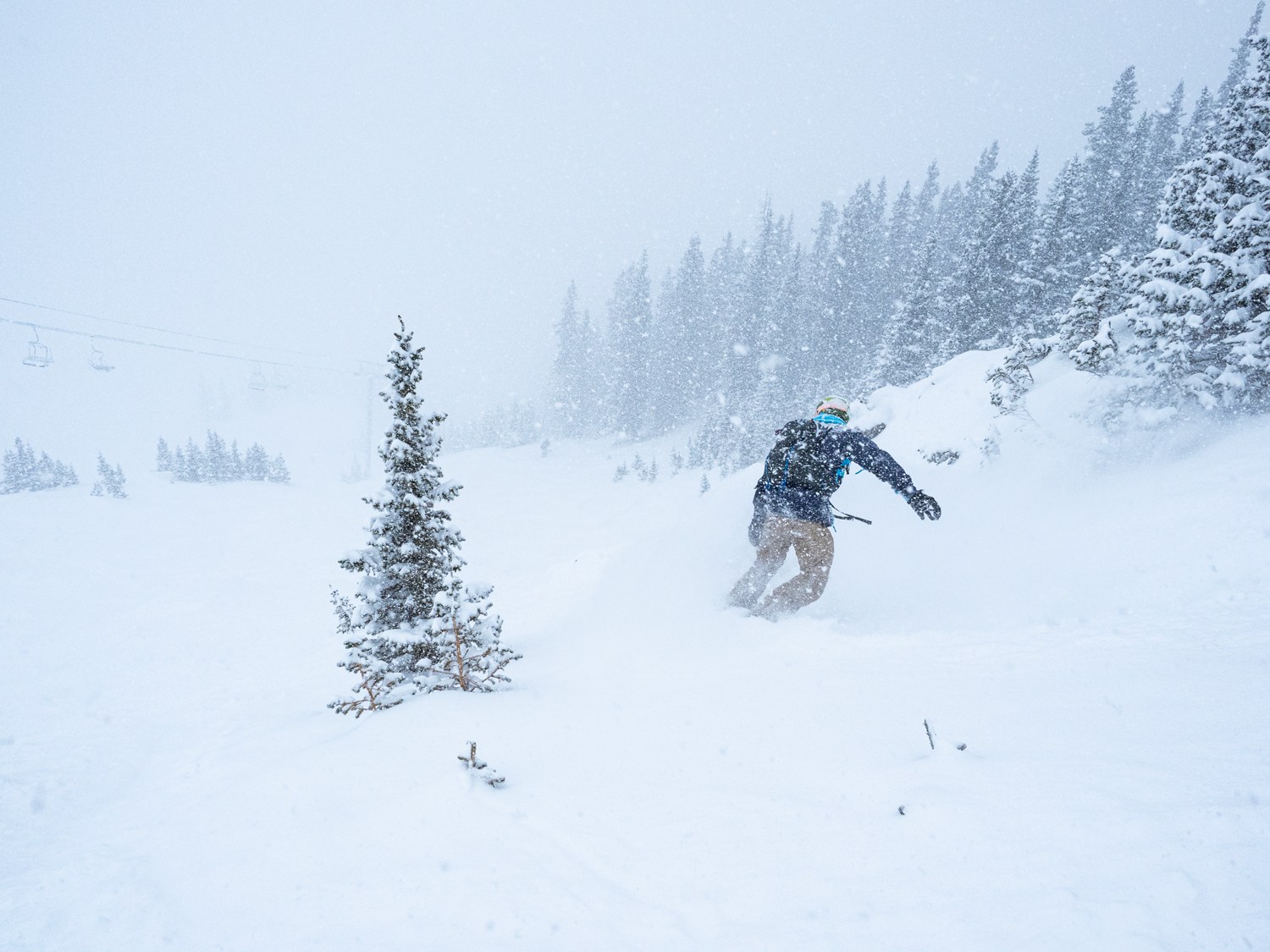
Although its annual snowfall is similar to many Colorado ski resorts, Taos Ski Valley’s storm track is its own animal and can be much more volatile. The mountain has some seriously steep terrain, which means it needs a solid snowpack before a lot of the good stuff really comes into play. Locals told us the magic number is around 60 inches, or five feet, sometimes reached as early as Christmas. Once that base is established, Taos does an incredible job of preserving the snow that falls.
If there’s one weather pattern that makes us pay extra attention to Taos, it’s El Niño. Tony Crocker’s long term research at BestSnow.net shows Taos is historically favored during El Niño winters, with strong events averaging roughly 107% of normal snowfall. Even more interesting, among major destination resorts, Taos stands out as the one that benefits from this pattern. With the 2026/27 El Niño shaping up to be one of the strongest on record, that doesn’t guarantee a powder trip, but it absolutely moves Taos WAY up our watch list this winter.
And if you’re looking for the safest bet later in the season, March is hard to argue with. By then the snowpack is usually at or near its deepest, the sun is higher in the sky, and historical snowfall data point to March as one of Taos’ strongest snow months.
Where To Stay
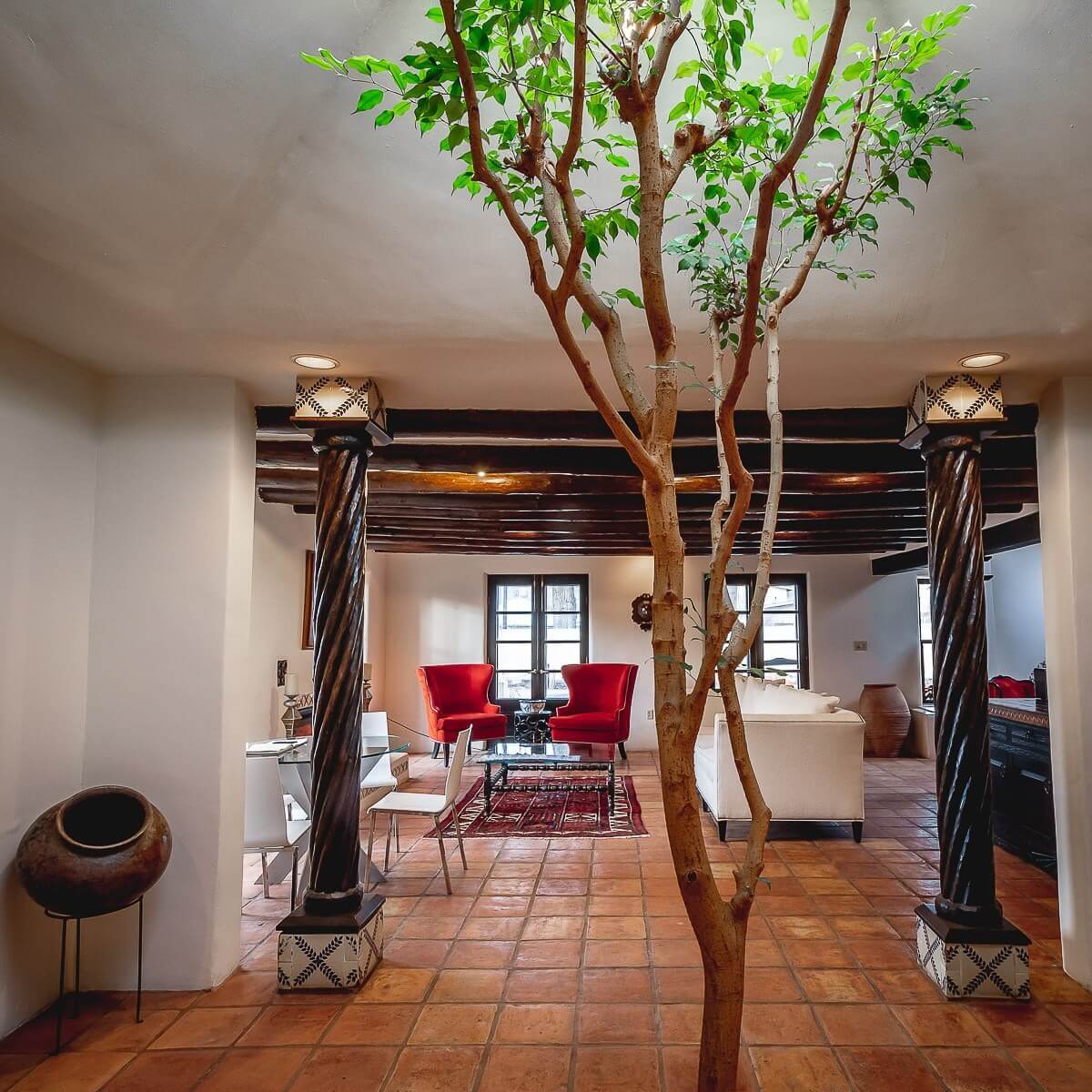
Be forewarned: the base of Taos Ski Valley sits at a dizzying 9,350 feet above sea level. I still remember my only bout of altitude sickness in Telluride, and it’s no fun. If you’re coming from lower elevations, consider giving your body a chance to acclimate by spending a night or two in the Town of Taos at roughly 6,967 feet, and make sure you’re drinking plenty of fluids. From upscale hotels to centuries old B&Bs, here are our favorite places to stay in Taos.
Extend The Trip
When people think about skiing in Taos, New Mexico, Taos Ski Valley understandably gets most of the attention, but there’s a lot more to this corner of the state than one mountain. One of the things that surprised us most was how different each ski area feels, along with the mountain towns surrounding them. Red River has its own personality, Angel Fire offers a completely different experience, and there are even more options if you’re willing to turn the trip into a New Mexico ski road trip. For a closer look at the mountains around Taos, check out our guide to the ski areas near Taos, or zoom out even farther with our New Mexico Ski Resorts Map & Overview of Every Ski Area.
Unlike Anywhere
People who ski Taos know the mountain is only part of what makes this place special. Taos Ski Valley blends world class skiing with a mix of cultures you really don’t find anywhere else. Founded by Swiss German ski pioneer Ernie Blake and shaped by generations of European influence, the village still carries an unmistakable Alpine feel. Head down to the Town of Taos and that changes completely, with centuries of Native and Spanish history woven into the food, architecture, art and culture.
Describing all of this, you’d think Taos would feel trendy or manufactured. Far from it. Taos is what it is: an enigma wrapped in a mystery. Home to buildings where people have lived for more than a thousand years. An art colony. A ski mountain with deep European roots sitting above one of the most culturally distinct towns in the West. Taos embraces its past while still looking toward the future. Once you visit, you’ll get it. Until then, it’s just words.