There are a lot of mountain bike trails that get hyped beyond reality. Then there’s the Downieville downhill. Before riding it, I’d heard every description imaginable. Loose. Rowdy. Unrelenting. Old school. The kind of words that make you wonder if you’re signing up for an all-day survival exercise instead of one of the most famous mountain bike descents in the country.
As someone who tends to ride conservatively, I wondered if I was really ready. I’m perfectly happy rolling features that others send. I’ll probably never hit some of the biggest lines on Tahoe’s measuring stick, Mr. Toad’s Wild Ride, and I’m completely fine with that.
Then I finally rode Downieville.
What I found wasn’t terrifying. It was one of the most thoughtfully built, best maintained, and downright fun mountain bike descents I’ve ever experienced. Challenging? Absolutely. Punishing? Not nearly as much as its reputation suggests.
Don’t Let The Reputation Fool You
If you only remember one thing from this guide, remember this:
Downieville isn’t difficult because of massive mandatory features. It’s difficult because it simply never lets up.
The trail asks you to stay engaged for nearly 15 miles and roughly over 5,000 feet of descending. If you can keep your focus, ride within yourself, and take breaks when needed, you’ll probably finish with a much bigger smile than you expected.
Know Before You Ride
Let Everyone Else Go First
Most shuttle riders pile onto the first morning runs and immediately sprint down the trail. Don’t. Grab a snack. Take in the view. Let the eager riders disappear down the mountain. Within minutes you’ll likely have long stretches of trail all to yourself, making the experience feel far more remote than its popularity would suggest.
Pace Yourself
The hardest riding isn’t necessarily at the top. By the time you reach Lower First Divide, you’ve already descended for hours. Fatigue starts replacing confidence, and that’s when mistakes happen. We’ve had friends suffer serious injuries on this trail, not because they couldn’t handle the technical features, but because they lost focus late in the ride. Ride at 90 percent instead of 100 percent early in the day. You’ll have far more left in the tank when it matters most.
Don’t Forget Your Swimsuit
The ride ends alongside the North Yuba River. After descending into a canyon that’s often baking in summer heat, jumping into the river isn’t just refreshing. It’s one of the best post ride traditions in California. Better yet, public restrooms at the finish make it easy to change before and after your swim, so there’s no excuse not to take the plunge.
Before You Roll Into Town

Downieville is tiny. Not “small mountain town” tiny. Actually tiny. That charm is part of what makes it special, but it also means restaurants and businesses operate on a different schedule than you’re probably used to. Staffing can be difficult, and hours sometimes change with little notice. Finish your ride between 3:00 and 5:00 PM and your dining choices may be surprisingly limited. Our advice? Come with a plan. Check Facebook pages, websites, or simply call ahead before assuming somewhere will be open. Looking for more things to do while you’re in town? From local events and places to eat to nearby attractions, Discover Downieville is a great resource for planning the rest of your visit.
When to Visit
Downieville’s riding season depends on where you want to ride. At 2,890 feet, many of the lower elevation trails are rideable nearly year round. But the iconic Downieville Downhill starts at more than 7,100 feet, so shuttle season is dictated by snowpack and spring melt. In most years, shuttles begin running sometime in April and continue through November.
Like many mountain destinations, the sweet spot comes during the shoulder seasons. As soon as the high country opens in spring, you’ll find cool temperatures, tacky dirt, and hero dirt that makes every corner feel glued to the trail. Fall is just as good, with crisp mornings, comfortable afternoons, and some of the best trail conditions of the year.
That said, don’t write off summer. Thanks to Downieville’s exceptional trail design, frequent maintenance, and mostly shaded forest riding, the trails hold up remarkably well even during the hottest months. Just know that the final miles of the descent drop into the canyon where temperatures regularly soar into the 90s. Fortunately, the ride ends beside the Yuba River, making a refreshing swim one of Downieville’s best post ride traditions. Public restrooms near town also make it easy to change before taking a dip.
If riding the classic shuttle route is at the top of your list, plan your visit between April and November, keeping in mind that opening dates can shift depending on how much snow fell the previous winter.
Downieville Shuttle Information
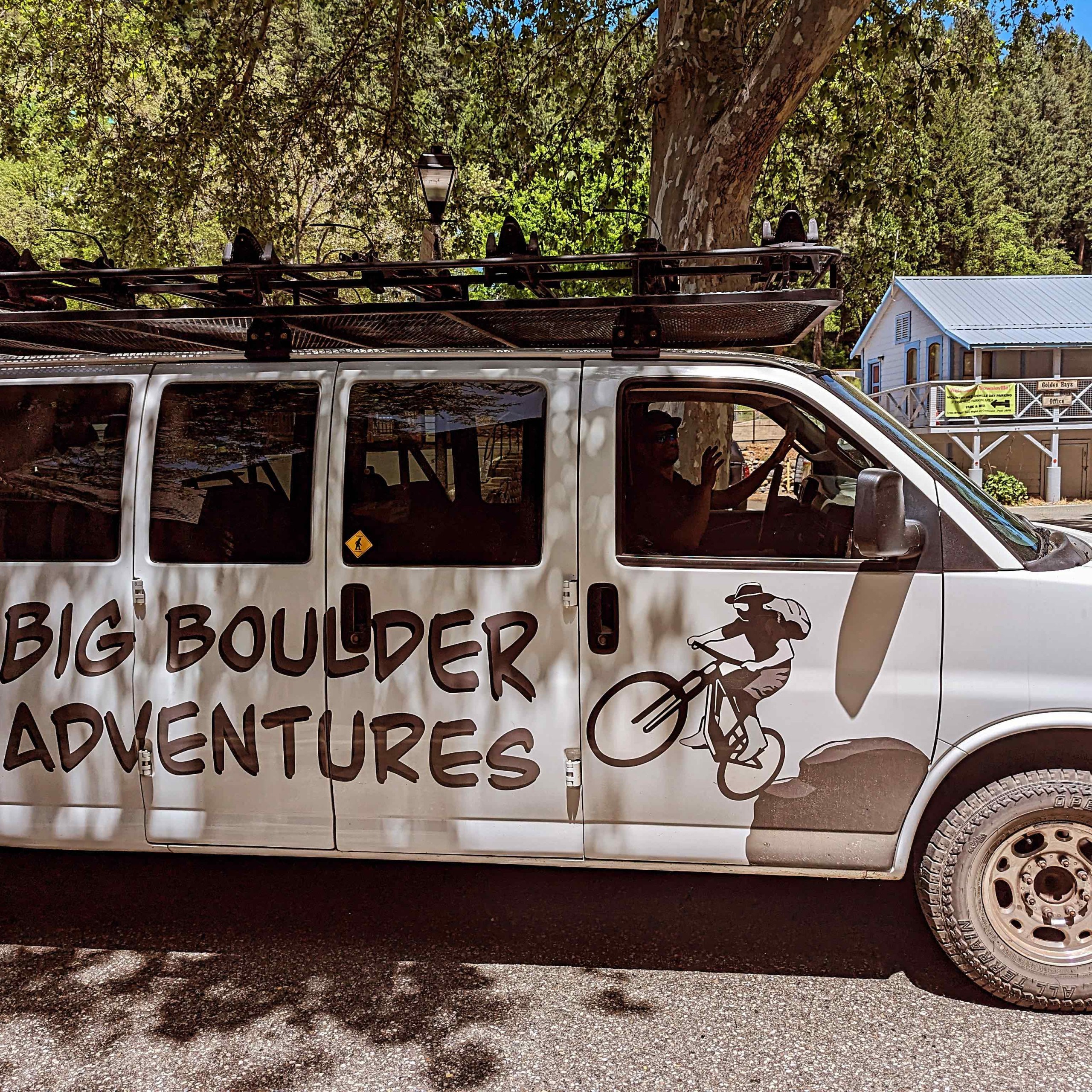
For most riders, the classic Downieville experience starts with a shuttle ride to the top. Several local outfitters offer daily shuttles during the riding season, saving you from climbing more than 4,300 vertical feet before the fun even begins.
Expect to pay around $40 to $50 per rider depending on the outfitter and trail selected. Reservations are strongly recommended during weekends and holidays, especially throughout the summer.
Popular shuttle providers include:
Both are great resources for current trail conditions, opening dates, and local recommendations. While many riders use one of the local shuttle companies, you can also run your own shuttle with two vehicles if you’re riding with friends. It’s a great way to save a little money and gives you the flexibility to start whenever you’d like.
Why Downieville Rides So Differently

One thing became obvious almost immediately. These weren’t trails built by mountain bikers. They were built by miners. Long before suspension forks and dropper posts, miners carved the fastest routes they could between camps, creeks, and gold claims. Efficiency mattered. Comfort didn’t. That history still shapes the ride today.
Unlike modern purpose built flow trails where corners are engineered and grades are carefully controlled, Downieville follows the terrain. It dives through drainages, hugs canyon walls, climbs over granite outcrops, and snakes through dense forests because that’s where the original routes happened to go. Despite that rugged heritage, what impressed me most wasn’t how raw the trail felt. It was how incredibly well it’s been maintained.
Rock armoring, drainage work, and constant upkeep have transformed these historic mining routes into one of the best mountain bike experiences anywhere. That level of quality doesn’t happen by accident. For more than three decades, Sierra Buttes Trail Stewardship (SBTS) has helped build, restore, and maintain the Downieville trail network, preserving these historic routes while ensuring they remain world class places to ride. If you’ve ever finished the Downieville Downhill with a huge smile on your face, consider supporting their work at SierraTrails.org, where you can donate or learn about current trail projects.
Every summer, these same trails become the stage for one of mountain biking’s most iconic endurance events, the Downieville Classic.
Riding The Downieville Downhill
Distance: Approximately 15 miles | Elevation Loss: Over 4,300 feet
Highest Elevation: 7,100 feet | Lowest Elevation: 2,800 feet
People call it a “pedaling downhill.” Honestly, I expected far more climbing.
Yes, there are two memorable climbs of roughly 500 vertical feet each, and they’re classic Sierra foothill gut punches. But considering how much descending you get, the amount of pedaling is surprisingly minimal.
Even better, the trail constantly changes personality. Loose volcanic rock gives way to granite slabs and roots. Clay singletrack transforms into narrow shale bench cuts. Every section feels distinct enough that the ride never becomes repetitive.
Maps & Navigation
While the route is well signed, we highly recommend downloading the route to Trailforks before your ride. Cell service is limited throughout much of the descent, so offline maps can be invaluable.
Trailforks Links:
- Classic Downieville Downhill Shuttle Lap
- Packsaddle Trail
- Sunrise trail
- Butcher Ranch (Upper) | Butcher Ranch (Main) Trail
- Third Divide Trail
- Upper First Divide Trail
- Lower First Divide
Packsaddle or Sunrise?

Your first decision comes before the ride even begins.
Most riders choose between Sunrise Trail and Packsaddle. My riding partner, Darin Haworth, described Sunrise as the smoother, more relaxed option, while Packsaddle adds a little more spice.
We picked Packsaddle, and I’m glad we did.
The opening berms are absolutely perfect. They honestly feel like something you’d expect inside a lift served bike park. Rollers encourage pumping while optional rock features let riders choose between catching air or keeping both wheels planted.
Eventually the trail reconnects with Sunrise, where the atmosphere changes completely. Towering trees draped in moss create a forest that feels straight out of The Lord of the Rings.
Butcher Ranch: The Main Event

Everything before Butcher Ranch is simply the appetizer.
Cross Pauley Creek Road and, as This Is Spinal Tap would say, the trail gets turned up to 11. This is the section everyone talks about, and yes, it’s technical. Yes, it’s relentless. But it’s also where Downieville completely won me over.
Outside of the famous “Big Dip” near the top and the iconic “river crossing”, nearly every feature can be rolled if you’re comfortable riding technical terrain. What surprised me most wasn’t the difficulty. It was just how fun it was.
The problem with many legendary mountain bike trails is that popularity eventually beats them up. Brake bumps turn into trenches. Small holes become axle swallowing craters. Corners lose their shape.
That isn’t Butcher Ranch.
Where those problems could have existed, the trail has been beautifully reinforced with rock armoring that feels natural rather than forced. Instead of fighting a blown out trail, you’re rewarded with creative line choices, playful rock gardens, and a rhythm that never seems to quit. The pitch is just right. Not so steep that you’re hanging on for dear life, and not so flat that you’re wondering where the downhill went.
Honestly, I could have spent the entire day lapping Butcher Ranch and gone home completely satisfied.
Third Divide
Third Divide is pure speed.
This is where Downieville transforms into one long roller coaster through the forest. The smooth clay surface encourages momentum while just enough rocks, roots, and corners keep you honest.
Downieville Outfitters compares it to the speeder bike chase through the forests of Endor. For me, it felt more like the mine cart chase from Raiders of the Lost Ark. You’re dropping fast, weaving between towering pines, and praying your brakes don’t decide today’s the day they retire as the creek rushes far below.
It’s exhilarating, slightly terrifying, and almost impossible to wipe the grin off your face.
Upper First Divide

If Tahoe has the Flume Trail, Downieville has Upper First Divide.
Carved into the side of a steep canyon, the trail clings to the mountainside with some sections feeling barely wider than your tires. Far below, Lavezzola Creek crashes over granite boulders, its roar following you nearly the entire way.
Downieville Outfitters says it’s only about a 30 foot drop to the creek below. Maybe it is 30 feet, but from the saddle it sure feels like 300 as you thread narrow bench cut singletrack with nothing but open air to your right.
It’s not overly technical, but it demands your attention. Look up for just a moment and you’re rewarded with one of the most scenic stretches of the entire ride.
Lower First Divide
You’d think the trail would finally let up.
It doesn’t.
Instead, Lower First Divide throws one final sampler platter at you: roots, rocks, corners, fast sections, and technical features. Everything you’ve experienced throughout the day comes together one last time.
If you’re riding during the summer, this is also where the heat starts making itself known. The lower canyon regularly bakes in temperatures well into the 90s, and mental fatigue becomes just as important as physical fatigue.
It’s a reminder that Downieville isn’t won by the strongest rider.
It’s won by the rider who can stay focused until the very end.
Is Downieville Worth the Hype?
Absolutely. Not because it’s the gnarliest trail you’ll ever ride. Not because every feature is bigger than the last.
It’s because Downieville delivers something that’s becoming increasingly rare: a truly backcountry feeling ride that blends history, incredible trail stewardship, constantly changing terrain, and nearly uninterrupted descending into one unforgettable day.
The hype is real. Just maybe not for the reasons you expected.