What is this winter going to look like? Who knows. One thing we do know is that the biggest names on Epic and Ikon aren’t the only answer. When lift lines swell, parking reservations become part of the adventure, or we simply want something different, we start looking under the proverbial rock for ski areas where less of the experience is about logistics and more of it is about skiing. That’s where the best small ski resorts come in. Some are truly tiny. Others have surprisingly big terrain but still feel small because they skip the sprawling villages, massive crowds and mega resort polish. If you’re looking for fewer frills, more personality and a better chance of riding instead of crying, these are ten of our favorites.
What We Mean By A Small Ski Resort
For us, “small” isn’t a strict acreage cutoff. It’s about the experience. A mountain can have well over 1,000 acres and still feel small if it’s independent, low key, easy to navigate and built around skiing instead of everything surrounding it. On the flip side, a 200 acre hill can ski far bigger than the trail map suggests. We chose these resorts based on the whole package: terrain, snow, personality, crowds, affordability and whether they still feel like places where skiing comes first.
49 North Mountain Resort (Washington)
Vertical Drop: 1,850 Feet
Skiable Acreage: 2,325 Acres
Annual Snowfall: 300 Inches
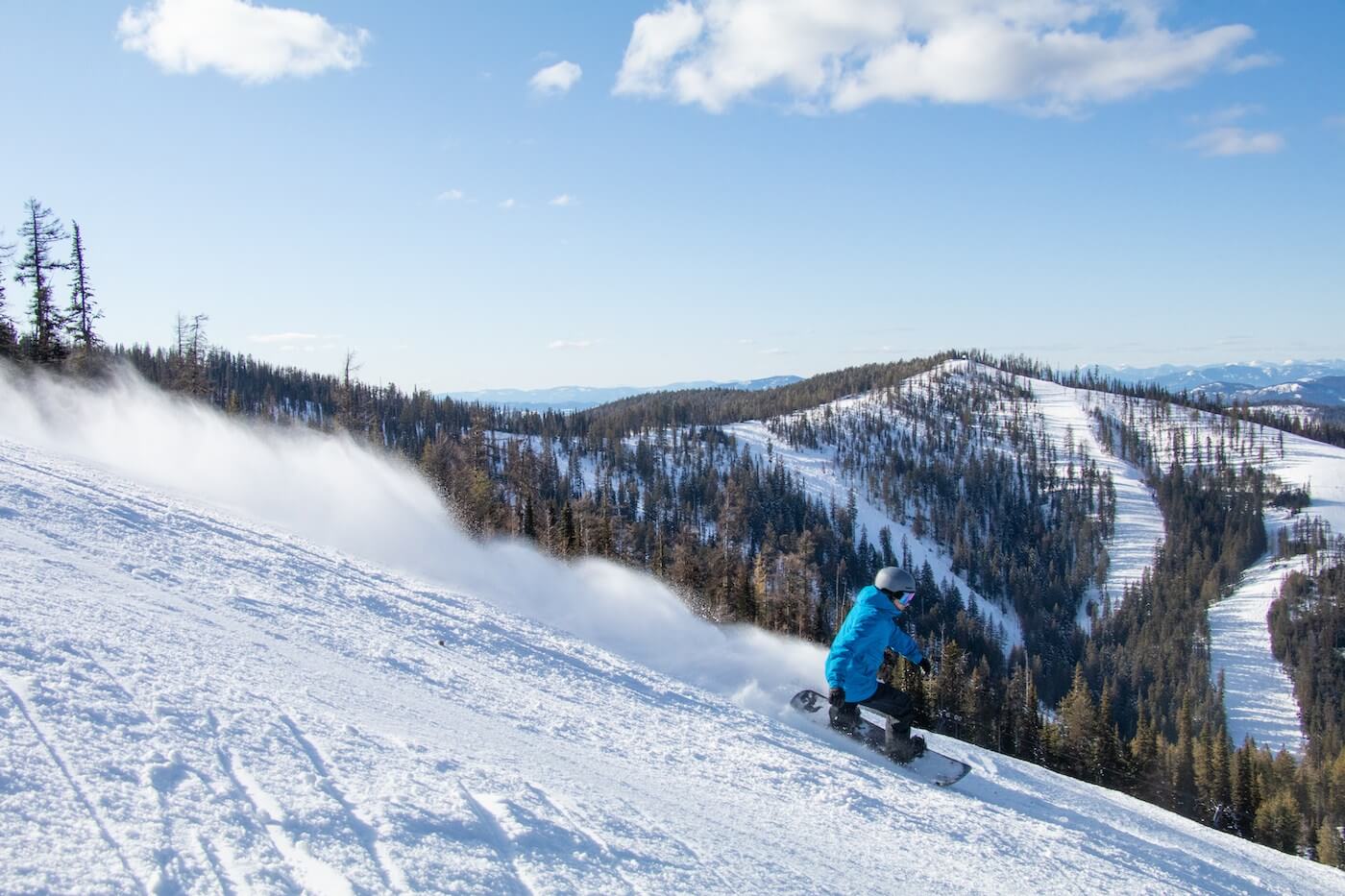
Although Washington is normally known for its “Cascade Concrete,” head inland and you’ll find much drier snow at 49 North. And despite having 2,325 acres spread across three basins, it still feels more like an independent hometown mountain than a sprawling destination resort. Expect wide open groomers where you can let it fly, plenty of glades to disappear into and enough terrain that you could spend days exploring without repeating yourself. Roughly 50 miles north of Spokane and still on the Indy Pass, 49 North is a perfect example of why “small” isn’t always about acreage.
Red River (New Mexico)
Vertical Drop: 1,600 Feet
Skiable Acreage: 290 Acres
Annual Snowfall: 214 inches
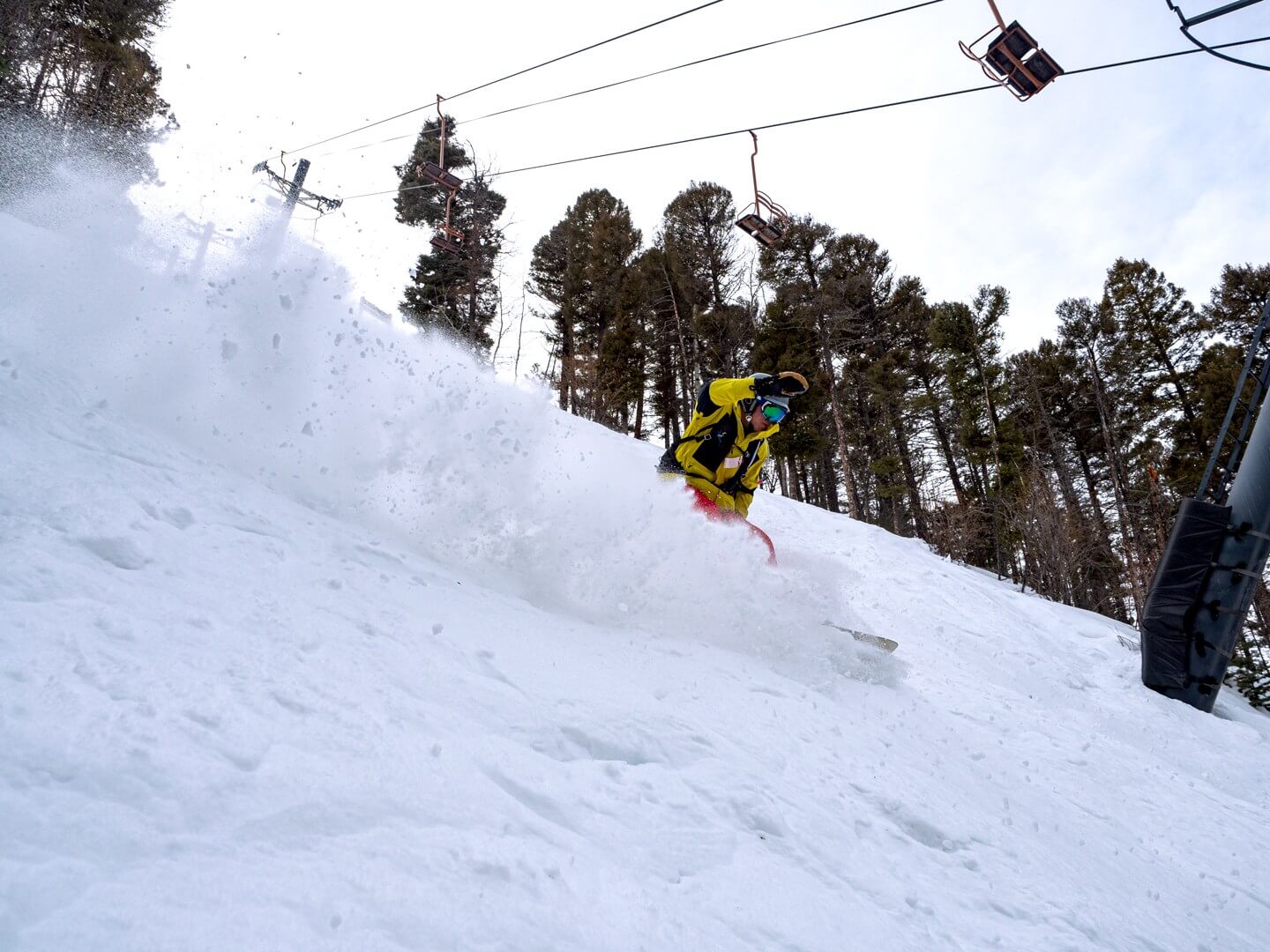
They say don’t judge a book by its cover, and when it comes to Red River, that’s EXACTLY true. Ever since we skied here, we fell in love with this place. Although the stat sheet says it’s only around 290 acres, don’t let that faze you. Just like Taos, the snow here stays soft, and out of any ski area we’ve visited, this place maximizes EVERY acre, making it feel far bigger than the trail map suggests. Expect great fall line skiing, and when they mark something expert, they really mean it. Then when the lifts stop spinning, you’re already in a real mountain town with a surprisingly deep live music history, including the legendary Motherlode Saloon. One bit of mountain lore we heard from a manager there is that artists like Neil Young were even “discovered” within its walls. Whether every detail survives a fact check almost feels beside the point. It’s exactly the kind of story that fits a place like Red River. Planning on visiting? Here’s our deep dive into what to do, where to eat and where to stay in Red River.
Lost Trail Powder Mountain (Montana)
Vertical Drop: 1,800 Feet
Skiable Acreage: 1,800 Acres
Annual Snowfall: 300+ Inches
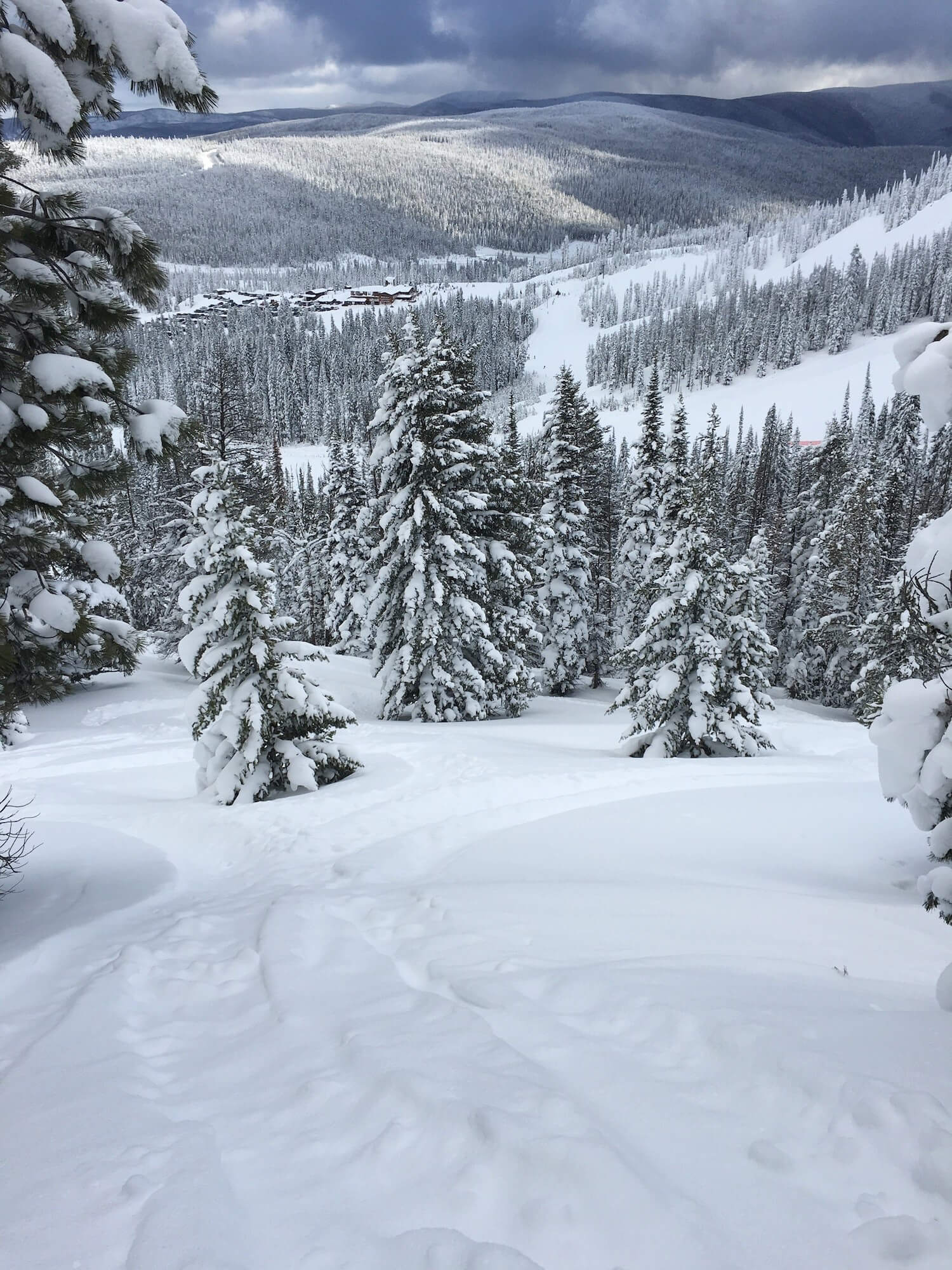
What’s the first thing most skiers and snowboarders are looking for? Reliably soft snow and hopefully some fresh powder. Even in Montana’s consistently good snow conditions, Lost Trail bubbles to the top. Sitting directly on the Montana and Idaho border, this family owned mountain keeps things refreshingly simple, with no sprawling village, 1,800 acres of terrain and everything from mellow cruisers to steep shots hidden between the trees. Better yet, Lost Trail operates Thursday through Sunday, making Thursday morning famous for one thing: Powder Thursday. Save some energy for a soak at nearby Jackson Hot Springs afterward, and if you’ve got an Indy Pass, Lost Trail remains one of the best excuses to point the car toward the Continental Divide.
Snowy Range (Wyoming)
Vertical Drop: 865 Feet
Skiable Acreage: 250 Acres
Annual Snowfall: 250 Inches
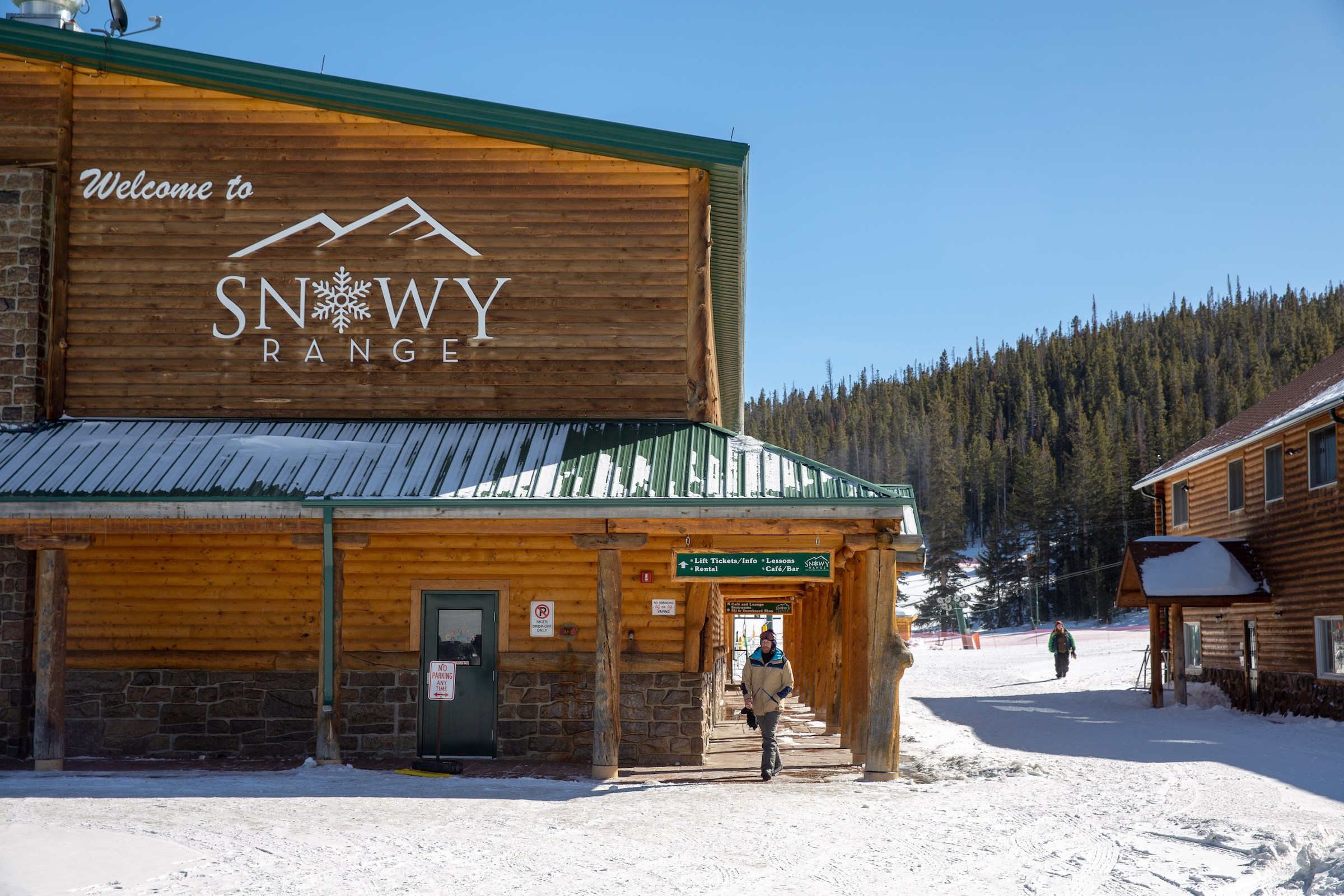
High maintenance skiers need not apply. If you’re looking for a place that’s affordable and provides gravity fed sliding without the attitude, you’ll like Snowy Range. Tucked into Wyoming’s Medicine Bow National Forest, it’s the kind of mountain where you can forget about fancy villages and just go skiing. At only 250 acres, it’s legitimately small, but 250 inches of snow, high elevation and affordable lift tickets make it a screaming deal compared with many bigger Western resorts. Better yet, it’s only about 2.5 hours from Steamboat, making Snowy Range an easy addition to a Colorado and Wyoming ski road trip or a pretty intriguing Plan B when you want to escape the destination resort scene.
Beaver Mountain (Utah)
Vertical Drop: 1,700 Feet
Skiable Acreage: 828 Acres
Annual Snowfall: 400+ Inches
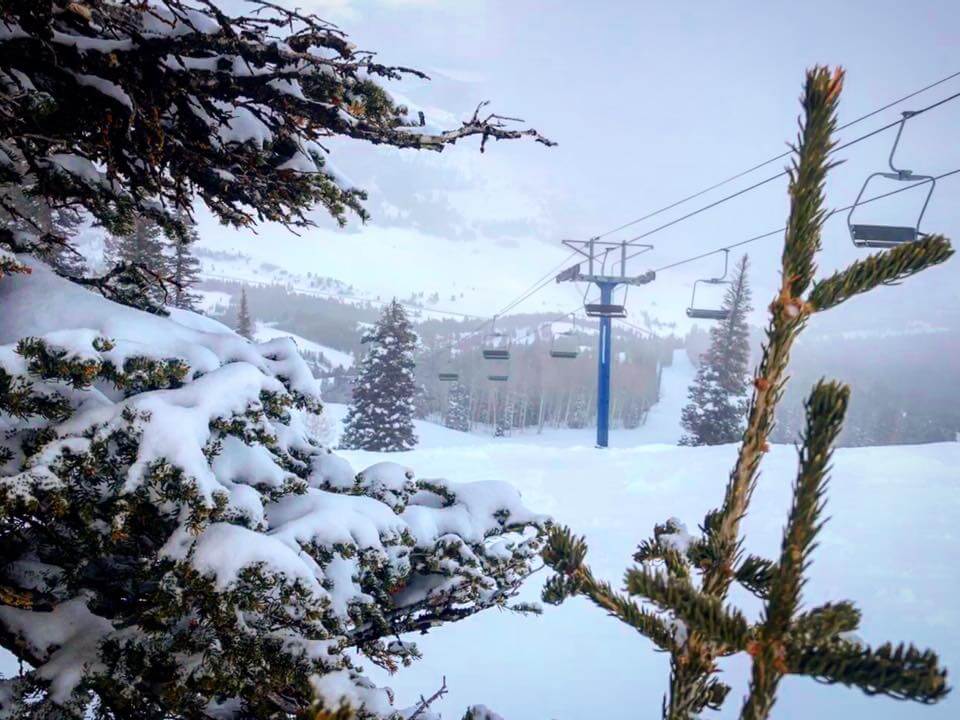
The secret’s out on Utah. It really does have some of the best snow on earth. The problem is everybody knows it too. On powder days, Big and Little Cottonwood can feel more like rush hour than a ski trip. The “Beav,” on the other hand, sits roughly 110 miles north of Salt Lake City, far enough from the metro madness to keep a slower pace while still delivering that dry Utah powder. Better yet, Beaver Mountain has been run by the Seeholzer family since 1939 and is the longest continuously family owned ski resort in the country. If you want Utah snow without the mega resort experience, this is exactly the kind of place we mean by small. And if you’ve got an Indy Pass, that’s another reason to point the car north.
Pomerelle Mountain Resort (Idaho)
Vertical Drop: 1,002 Feet
Skiable Acreage: 500 Acres
Annual Snowfall: 500 Inches

As an overall state, you really can’t go wrong visiting ANY Idaho ski area during the winter. And ever since we first rolled into Pomerelle back in 2017, we’ve kept finding reasons to return. It’s not because the mountain has massive vertical or gnarly steeps. It’s the vibe and the consistently good skiing. You hear kids laughing, the beer in the lodge doesn’t require a second mortgage, and the corduroy is some of the best we’ve skied anywhere. Then there’s the absurd stat for a mountain this size: roughly 500 acres receiving around 500 inches of snow each winter. And if you’ve got the education and gear to venture beyond the ropes, the surrounding Albion Mountains open up an entirely different side of Pomerelle, with everything from mellow tree skiing to some surprisingly rowdy backcountry terrain. With longtime employees Zack and Crystal Alexander now carrying the torch as owners, Pomerelle feels like exactly the kind of Mom and Pop ski area this list was built to celebrate.
Purgatory (Colorado)
Vertical Drop: 2,072 Feet
Skiable Acreage: 1,635 Acres
Annual Snowfall: 260 Inches
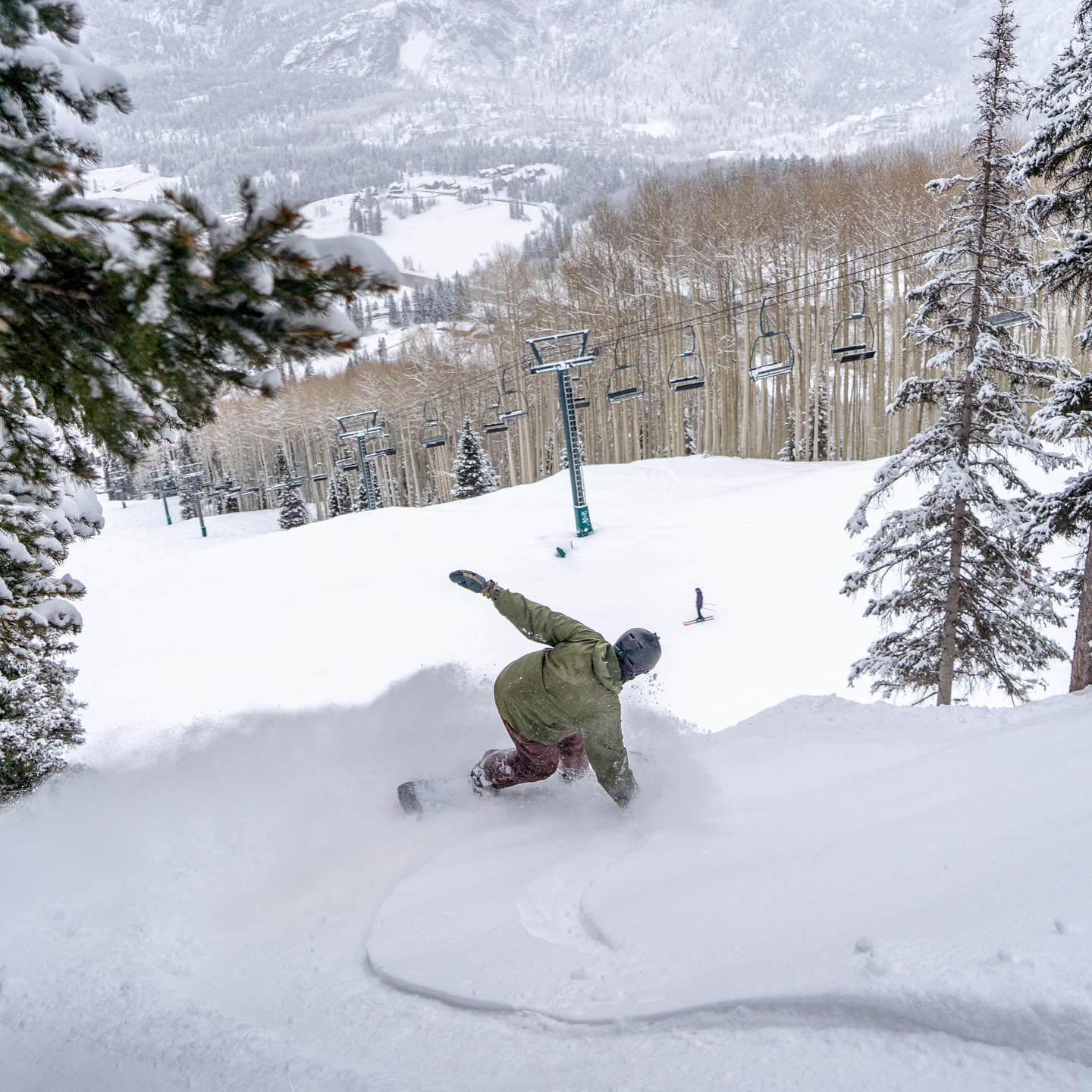
Don’t be put off by its name. The skiing here isn’t going to be full of torment or suffering. Rather, expect soft, heavenly snow without the sea of humanity you’ll find at many of Colorado’s bigger names. That quieter feel lets you actually enjoy what Purgatory does best, especially if you’re a strong intermediate. If you’re a master carver of groomers, you’ll find plenty filled with rollovers, banks and terraces that can make a normal cruiser feel like a giant boardercross course. And there’s plenty for experts too, including steep trees and bumps. Lots and lots of bumps. Lastly, if the lift served mountain somehow isn’t enough, Purgatory’s guided snowcat operation opens up another 35,000 acres beyond the resort boundary.
Bear Valley (California)
Vertical Drop: 1,900 Feet
Skiable Acreage: 1,680 Acres
Annual Snowfall: 346 Inches
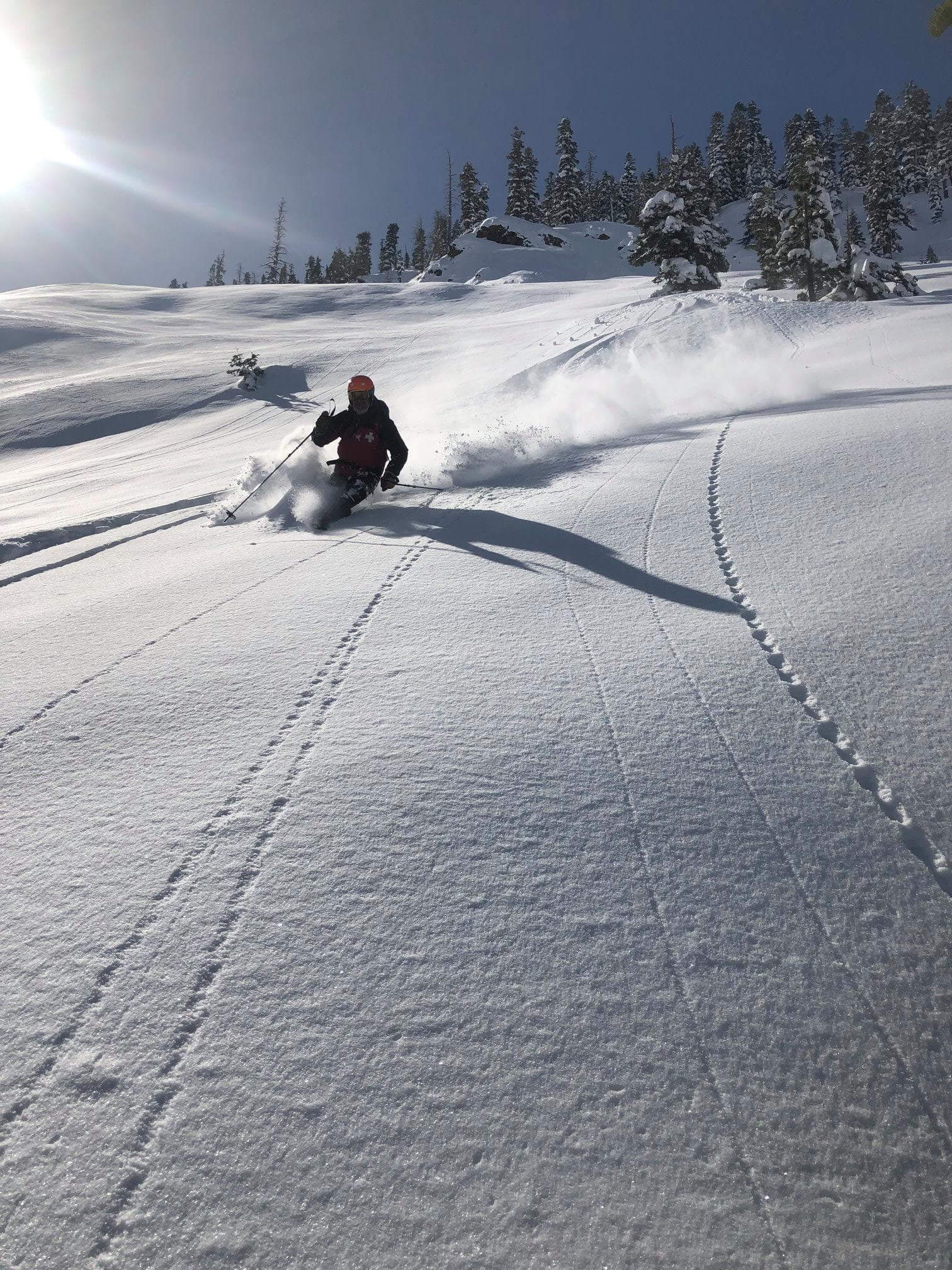
Ok. Ok. Yes, compared to many others on this list, Bear Valley is way more popular. But line it up against California’s bigger ski destinations and this place still feels like a hidden gem sitting right under people’s noses. As the crow flies, Bear Valley is only about 30 miles from the legendary steeps of Kirkwood, but once Highway 4 closes over Ebbetts Pass for winter, the two mountains might as well be worlds apart. This is a good thing. Instead of the in your face entertainment and massive crowds, Bear Valley stays remarkably chill while still delivering legitimate big mountain terrain, including the 500 plus acre Grizzly Bowl with steep lines, drops and cliffs. And since returning to skier ownership in 2023, that old school mountain first personality feels especially appropriate.
Willamette Pass (Oregon)
Vertical Drop: 1,563 Feet
Skiable Acreage: 555 Acres (with TONS of sidecountry)
Annual Snowfall: 430 Inches
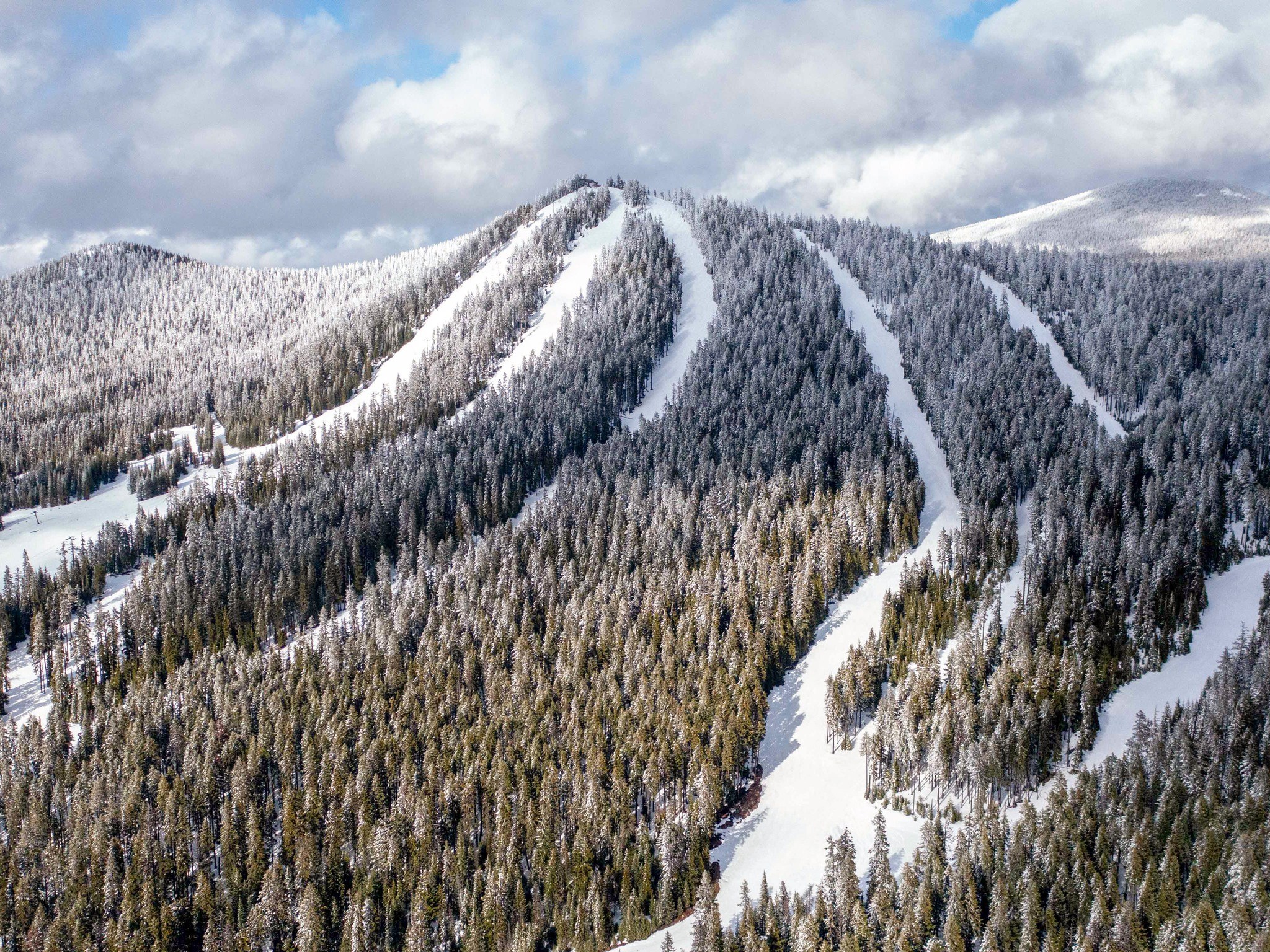
Willamette Pass made our list because it checks an almost ridiculous number of boxes for such a compact mountain: more than 400 inches of snow, tons of lift accessed terrain to explore beyond the obvious runs, great tree skiing and legitimately steep pitches, including RTS, which hits about 52 degrees at its steepest point. Then there’s the Eagle Peak Accelerator, Oregon’s only high speed six pack, which helps you rack up laps quickly on all that terrain. For 2026/27, the resort also more than tripled its snowmaking capacity, adding coverage to nearly 70 additional acres. If you want the full service Oregon resort experience, head to Mt. Bachelor. But if you’re after uncrowded skiing with ample room to explore, Willamette Pass is tough to beat.
Saddleback (East – Maine)
Vertical Drop: 2,000 Feet
Skiable Acreage: 600 Acres
Annual Snowfall: 225 Inches
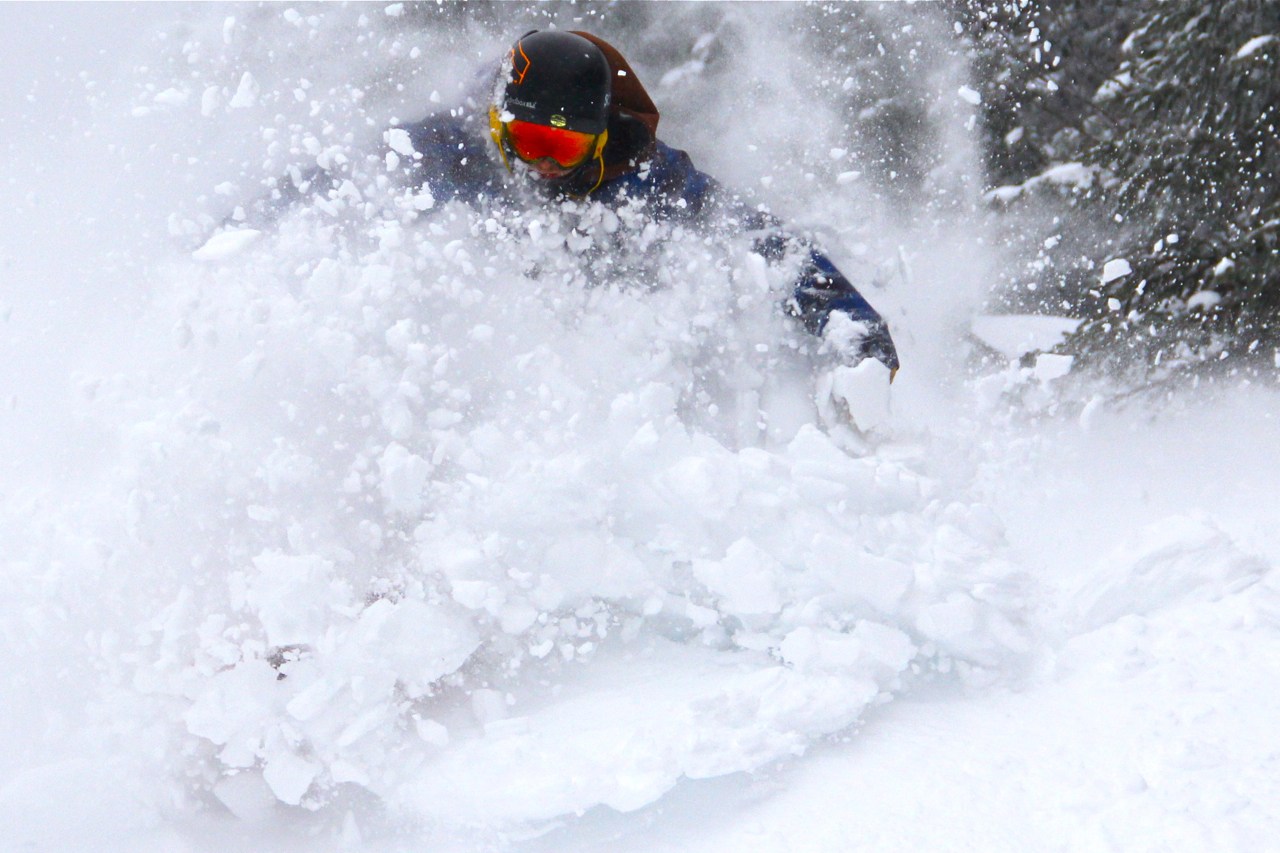
Saddleback might stretch the definition of “small” on paper, especially after growing to more than 600 acres since its 2020 rebirth. But this is exactly why we don’t judge these mountains by acreage alone. With a 2,000 foot vertical drop, relatively light skier traffic and no sprawling mega resort scene, it still delivers that ski first experience we’re looking for. Better yet, it’s one of only a handful of Eastern ski areas reaching above 4,000 feet, and when Maine gets hammered, head straight for the Casablanca Glades for steep, classic New England tree skiing.
Sometimes the best ski trips happen when you get away from your normal and point the car somewhere you haven’t been before. These small ski resorts may not have the biggest villages, flashiest lifts or most recognizable names, but that’s exactly the point. They’re the kind of places where skiing still comes first and a powder day doesn’t have to feel like a battle.
If you find yourself at one of the mountains on this list, keep your eyes peeled for a tan ’95 4Runner. You may just see us on first chair. Happy hunting!
For more trip planning ideas, including the best time of year to visit certain resorts, what to bring and where to find powder days long after a storm, check out our Ski Trip Planning guide: