People travel from around the world to experience what Utah famously calls “The Greatest Snow on Earth.” Ask most skiers where they’re headed in Utah and you’ll probably hear the usual suspects. Alta. Park City. Maybe even one of the Ogden area resorts like Powder Mountain. Southern Utah’s Brian Head Ski Resort usually isn’t one of them, and there are a few reasons why.
Yes, Brian Head delivers that same soft Utah goodness, but it does it in an entirely different version of a Utah ski trip. It comes in a much quieter and mellower package. If your perfect ski day means wide open groomers, low angle pow, and enough elbow room to lay down trenches, Brian Head starts looking VERY appealing.
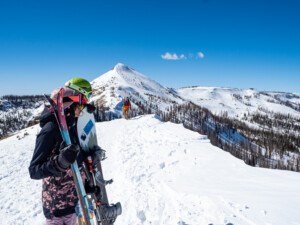
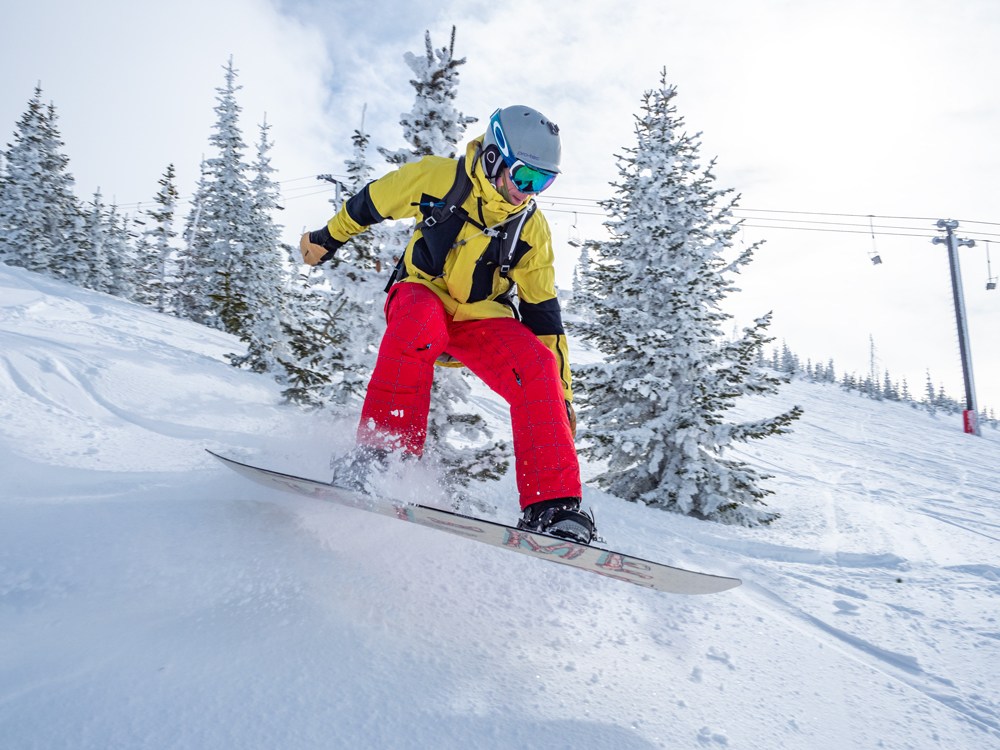
Families with powder pups and carving fanatics should especially love it. And if you’re the kind of skier or snowboarder who’d happily trade an extra 1,000 feet of vertical in exchange for soft corduroy, relaxed laps and room to make your own turns, Brian Head might surprise you. Brian Head is ideal for what we call hippy pow: smooth, low angle, downright righteous turns with plenty of space to roam.
Why Brian Head Feels So Different From The Rest Of Utah

Utah skiing revolves around Salt Lake City. Of the state’s 15 ski resorts, 10 are within about an hour of Salt Lake City and 13 are within roughly two and a half hours. Brian Head isn’t one of them. Not even close.
Far From The Wasatch Crowds
Brian Head is WAY down in Southern Utah. We’re talking WAY, WAY down! It’s roughly three hours north of Las Vegas and about three and a half to four hours from Salt Lake City. That completely flips the normal Utah ski trip map. Suddenly Vegas becomes the logical airport instead of Salt Lake.
That isolation is a big part of what makes Brian Head work. You still get Utah snow without being plugged into the same ski corridor as nearly everyone else visiting the state. Then there’s the elevation. Brian Head’s base sits at 9,600 feet, the highest ski resort base in Utah, while the Giant Steps side tops out around 10,900 feet. When we skied here, it’d been many days since the last storm and somehow the snow STILL felt like true packed powder. It was soft, forgiving and ridiculously carveable instead of firming up into something you had to fight. Brian Head itself has only around 150 permanent residents, which helps explain why the place feels more like a tiny mountain outpost than a traditional ski town.
That local feel isn’t just something we noticed. During the 2025/26 season, Brian Head held passholder appreciation mornings where Giant Steps opened an hour early so locals could get first tracks. Brian Head regular Zack Phelan of Snow Life, who skied here extensively last season, remembers free hot cocoa and donuts being part of the festivities too. It’s a small thing, but it says a lot about the family and local vibe you get here compared to bigger destination resorts.
Brian Head At A Glance
Base Elevation: 9,600 feet
Summit Elevation: 10,920 feet
Brian Head Peak: 11,307 feet
Vertical Drop: 1,320 feet
Skiable Terrain: 650+ acres
Trails: 72
Lifts: 8
Average Snowfall: 350+ inches
Best For: Families, intermediates, carving and hippy pow
What Brian Head Is Actually Like To Ski
At first glance, Brian Head’s trail map makes the mountain look more spread out than it actually feels once you’re skiing it. In reality, the resort really boils down to two distinct personalities: Giant Steps and Navajo.
We spent most of our time lapping the Giant Steps area, and for us, that’s where Brian Head really came alive. Much of the terrain still has a mellow, approachable feel, but there’s more shape to it, with broad groomers, rolling pitches and plenty of room to let your skis or board run. If we had to compare the overall vibe to another mountain, it reminded us a little of Mt. Bachelor below the Summit lift, with mellow terrain that still had enough shape and playfulness to keep things interesting. So much of the terrain feels open and easy to read. From the main lift, you can pretty much see what you’re going to ski, and if something looks fun from the chair, chances are you can figure out how to get there.
Navajo takes the mellow side of Brian Head even farther. When we ventured over there, it almost felt like we’d entered another ski area. The terrain was noticeably lower angle, the groomers were HUGE and there were even fewer people than around Giant Steps. For beginners, families with powder pups and anyone who wants acres of room to work on their turns, Navajo makes a ton of sense.
The Bookends: Roulette & Alpen Glow

For us though, Giant Steps was simply more fun. And while most of the face wears its terrain right out in the open, the two outer lifts were the exception. The Roulette lift sits on the looker’s left side of Giant Steps, while Alpen Glow bookends it on the looker’s right. Both were fixed grip chairs when we visited, and neither zone was particularly obvious from the main lift. You had to intentionally work your way over there, and apparently a lot of people didn’t. Zack confirmed that’s still very much the case. He says a lot of skiers either don’t find their way back toward Alpen Glow or simply don’t bother, which means the Dunes can stay surprisingly untouched even when other parts of the mountain are tracking out. Powder Run is the obvious route off Alpen Glow, but the real fun is farther out in the Dunes when coverage allows. The far looker’s right side needs a deeper snowpack before it really comes into play.
Roulette had a nice moderate pitch with widely spaced trees, while Alpen Glow felt a little steeper and more consistent, with aspens you could weave through. The runs were shorter, but with fewer people making their way to the edges, we were still finding soft, untracked pockets several days after the last storm. Sometimes the best leftovers really are sitting out at the bookends.
What About Brian Head’s Expert Terrain?
Brian Head does have steeper terrain, but it’s scattered around the Giant Steps side rather than concentrated in one obvious expert pod. The Dunes area holds a chunk of advanced terrain we somehow barely explored. Honestly, I have no idea why. We usually make a point of skiing EVERY part of a mountain. Whether it was closed while we were there or we simply missed it, we don’t remember. It was our last stop on a long road trip, so that may have had something to do with it.
Can You Ski Brian Head Peak?

What we DO remember is standing at the top of Giant Steps Express, staring up at Brian Head Peak and thinking, why can’t we ski THAT? The whole face looked like one giant puzzle of fall lines, rolls, gullies and natural features, the kind of terrain that has you picking out lines in your head before you’ve even figured out if you can ski it. THAT was what I wanted to ski the most. Turns out, we could have. Zack says Brian Head Peak does have hike to terrain when coverage allows, with access from the Giant Steps side. You’ll want to check in with ski patrol before heading up since access depends on conditions, but apparently that giant face haunting me from above Giant Steps wasn’t completely off limits after all. And interestingly, Brian Head now has a massive expansion proposal working its way through the Forest Service process that could eventually put three new lifts on Brian Head Peak itself. A decision isn’t expected until around 2028, so it’s still very much a someday thing, but you can bet we’ll be paying attention.
What About Devo’s Pitch?
Then there’s Devo’s Pitch. Looking at the trail map now, this one REALLY has me scratching my head about how we missed it. It’s tucked near Roulette with its own access and exit trails through what looks like a big patch of trees, exactly the kind of little zone we normally go hunting for. My best guess is there simply wasn’t enough snow to open it when we visited. Zack says Devo’s is fun, but it comes with a few caveats. Wind can strip the snow down and make it pretty bony, the trees get tight and there are a few short pitches that get steep surprisingly fast. It sounds more like a fun little adventure to seek out when conditions are right than some guaranteed secret powder stash. Whatever the reason, between Dunes, Devo’s Pitch and Brian Head Peak, this mountain left us with a few unanswered questions. But that just gives us another reason to go back.
Why Brian Head’s Snow Works So Well

Even well beyond that first morning when powder hounds are howling and devouring every untracked turn, Brian Head just kept delivering. There’s a reason Utah has plastered “The Greatest Snow on Earth” on its license plates for decades. Tony Crocker’s snow quality research at BestSnow.net helps put some numbers behind it. Taos comes in at roughly 6.3% water content, Snowbird and Solitude around 8.5 to 8.6%, while Mammoth is closer to 12.8%. Brian Head doesn’t have its own measurement in Tony’s database, but what we experienced felt right in that Utah sweet spot: enough moisture to give the snow body and buoyancy without getting heavy. Zack describes it as “cold and chalky, but in a good way.” It’s not quite that classic Salt Lake City blower, but it’s still remarkably light.
That becomes REALLY noticeable once the fresh powder gets worked over. Instead of quickly consolidating into something firm, the packed powder can stay soft and forgiving. You can lay a board or two planks over, trust the edge and actually carve.
And maybe this is where our inner Jeff Spicoli comes out. You don’t need two feet of blower and a 40 degree pitch to have an amazing day. Give us some soft packed pow, plenty of room and a slope where you can open up your turns? Those are the kind of surfy turns we live for.
Snowboarders: Carry Your Speed
All that mellow terrain does come with one little carver beware: pay attention to the flats. Skiers have poles. We don’t. There are a few spots at Brian Head where losing momentum means watching your skiing friends casually pole away while you start wondering if it’s time to unstrap. We especially remember the transition between Giant Steps and Navajo as one of those places where carrying your speed mattered. After a few laps, you’ll figure out where to keep your momentum and which lines keep you moving.
Local Freshies® Tip: Look ahead before giving up your speed. That innocent looking rollover in front of you might be the beginning of a VERY long walk.
When Is The Best Time To Ski Brian Head?
One thing I’ve noticed after years of chasing snow around the West is that the farther south you go, snowfall can become a lot more feast or famine. Tony Crocker’s long term research at BestSnow.net confirms that suspicion at Brian Head, where snowfall is considerably more volatile than in the Wasatch.
Luckily, Brian Head has one pretty powerful hedge against that volatility: elevation. Its nearly 10,000 foot base (highest in Utah) helps preserve what does fall, giving the snowpack more staying power until the next storm arrives. Last season was a pretty remarkable example of that staying power. Brian Head received less than 40% of its claimed average annual snowfall and still managed to keep skiing going into May. Good snowmaking helps too, giving the mountain another tool to keep terrain going when Mother Nature isn’t cooperating. If you want enough coverage for places like Dunes, Devo’s Pitch and the other off piste pockets around Giant Steps, January and February would be our sweet spot, with February getting the nod if maximizing coverage is the priority.
If you’re thinking about coming earlier, Zack noticed a pretty consistent progression as terrain opened last season: Navajo first, followed by Pioneer, Wildflower, Giant Steps and then the more outlying chairs. That’s not an official opening sequence and it can obviously change with conditions, but it’s useful context if you’re considering an early season trip.
El Niño Can Tilt The Odds
Brian Head also has one interesting weather card up its sleeve: El Niño. When we dug through decades of snowfall data for our El Niño ski guide, BestSnow.net showed strong El Niño periods averaging roughly 113% of normal snowfall, making Brian Head one of the relatively few western ski areas where El Niño has historically tilted the snowfall odds in the right direction.
That doesn’t guarantee a powder trip. But if it’s an El Niño winter and Southern Utah starts getting hammered? Brian Head moves WAY up our watch list.
What Is Brian Head Village Really Like?
Let’s get right to it. You come here to ski, hang out with the people you came with, maybe cook dinner in the condo and wake up the next morning ready to do it all over again. It’s about spending time in the mountains rather than wandering a downtown packed with bars, shops and restaurants. What you’ll find instead is a collection of condos, a couple of lodges, a general store and a handful of places to eat wrapped around the ski area. And honestly, that fits Brian Head.
Local Freshies® Tip: If you’re staying in a condo, we’d stock up before driving up the mountain. Brian Head has places to grab the basics, but this isn’t the place to count on doing a full grocery run once you arrive.
The Biggest Food Surprise? Thai. Seriously.

Of all the things we expected to find in a tiny Southern Utah ski village at nearly 10,000 feet, really good Thai food was NOT on the list. Sook Jai Thai completely caught us off guard. We went in expecting something decent enough and came out blown away. Fresh ingredients, big flavors and one of those meals where you start wondering how this place ended up here. The owner summed it up perfectly when we visited: if something wasn’t good enough, it wouldn’t be on the menu. And I have to say, that rang VERY true.
And Of Course There’s Pizza

Pizano’s was another easy Brian Head win. Their motto, “Highest Pie in Utah,” is a playful nod to just how high up the mountain you are. But the name Pizano’s hit me on a totally different level. Growing up in the Chicago area, there was a pizza place near us called Papa Pizzano’s that we used to frequent. It’s long gone now, but seeing Pizano’s immediately brought back long forgotten memories of those pizza nights as a kid.
Don’t get me wrong, this wasn’t Chicago tavern style or something I’d put up against a great New York City pie, but the pizza still delivered. The crust had a crunch almost like toasted bread, and the Papa Tony had that sweet and slightly spicy thing going on that works REALLY well after a ski day. Maybe a little nostalgia helped, but sitting at nearly 10,000 feet in Southern Utah eating pizza that somehow reminded me of growing up outside Chicago? That’s the kind of random travel memory that sticks with you.
Where To Stay In Brian Head

We stayed in a condo right in the village, and honestly, that’s probably what we’d do again. Staying close to the lifts keeps a Brian Head trip simple: wake up, ski, relax and repeat. There are condos, vacation rentals and a couple of lodge options around the resort, while Parowan sits down at the bottom of the mountain if you need something on the way in or out. If skiing is the focus, we’d stay up in Brian Head and keep everything easy.
Getting To Brian Head: Don’t Trust Your GPS Blindly
From Interstate 15, the normal winter approach is straightforward: exit at Parowan and follow Highway 143 roughly 14 miles up the mountain to Brian Head. Just don’t blindly trust your navigation in winter. We learned that one the hard way. Driving west from New Mexico, our GPS kept sending us onto smaller and smaller roads until we ended up headed toward Cedar Breaks National Monument and were greeted by two wonderful words: ROAD CLOSED. Cedar Breaks Scenic Byway, Highway 148, closes seasonally each winter, so Highway 143 from Parowan is the reliable winter route. Check Utah road conditions before heading up, especially during storms when traction restrictions or temporary closures can still come into play.
One Stop Worth Making In Parowan
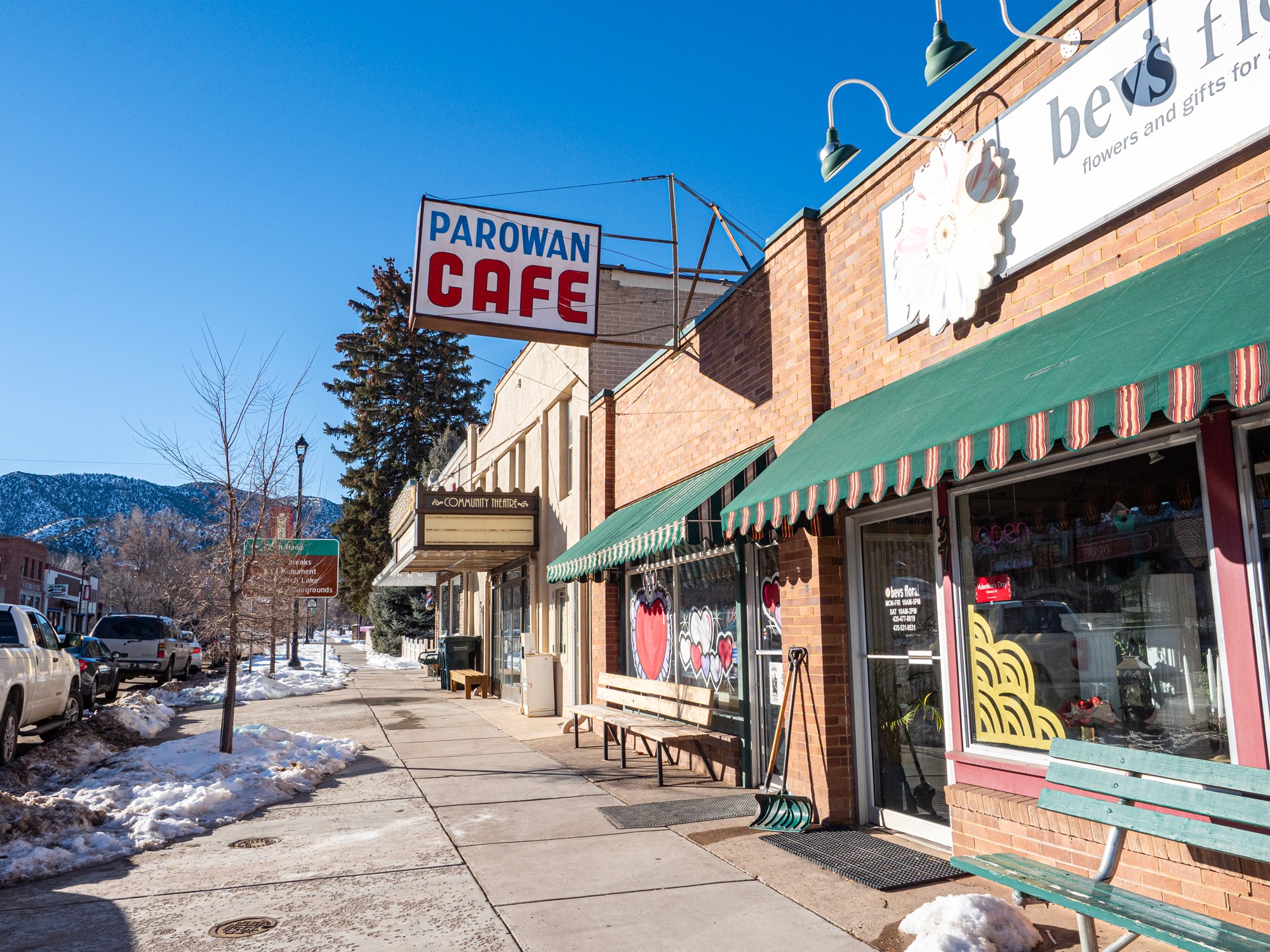
Parowan itself is quiet, but there is one place we’d happily stop again: Parowan Cafe. Walking inside felt like stepping straight into another era. I half expected Andy Griffith or Barney Fife to stroll through the door and grab a seat at the counter. The portions were HUGE, the prices were refreshingly reasonable and the whole experience felt about as far removed from a polished ski resort restaurant as you can get. It’s an easy breakfast or lunch stop before heading up Highway 143 or continuing on after your ski trip.
Is Brian Head Worth Skiing?
Brian Head isn’t where we’d send someone dreaming about dropping the couloir of death, yearning for quad burning vert or chasing last call shenanigans. But if you love soft Utah snow, wide open terrain and relaxed vibes, it’s VERY easy to have a great time here. We left with a few zones we still want to explore, a giant face above Giant Steps that continues to haunt me and more than enough reasons to come back. Brian Head isn’t trying to be Alta or Park City. And that might be exactly why you’ll love it. Because hippy pow isn’t a consolation prize. For many of us, it’s a way of life.